If you’ve ever worked with silicone hoses—whether in automotive, aerospace, industrial fluid transfer, or consumer appliance manufacturing—you’ve probably heard the term MVQ thrown around. Short for methyl vinyl silicone rubber, MVQ is the workhorse of the elastomer world for applications that demand temperature resistance, chemical stability, and long-term flexibility. But if you’re new to specifying or sourcing MVQ hoses, one question that’s almost certain to come up is: What is the elongation at break of MVQ Hose? As a supplier who’s spent the last 12 years walking shop floors with design engineers, maintenance teams, and small-business owners who just need a hose that doesn’t crack mid-shift, I’m here to break this down not as a textbook formula, but as something you can actually use to make better decisions for your operations. MVQ Hose

First, let’s get one thing straight: Elongation at break isn’t just a random number lab techs test for fun. It’s a measurement of how much a material can stretch before it snaps, right? For hoses, that’s make-or-break. A hose that’s too stiff will crack when it’s bent to fit a tight engine bay or when thermal expansion makes it pull at its fittings. A hose that’s too stretchy might leak, collapse, or even tear under the pressure of moving fluids. For MVQ specifically, this number is part of what makes it different from, say, EPDM or natural rubber. But here’s the catch: There’s no one-size-fits-all answer to what the elongation at break of MVQ Hose is. Let me explain why.
The biggest variable here is the formulation of the silicone. When we make MVQ hoses, we start with a base polymer, then add fillers, cross-linking agents, and sometimes modifiers to tweak its properties. If a customer needs a hose for extreme cold, we’ll adjust the formulation to keep it flexible at -60°C (-76°F), which will affect elongation. If they need it for high-heat exhaust applications that top out at 200°C (392°F), we’ll add a heat stabilizer that can shift that number. Even the thickness of the hose wall plays a role—an older, thicker hose I supplied a local heavy equipment shop has a higher elongation at break than a thin-walled hose we made for a medical device, which needs to be precise and not stretch too much when sterilized.
That said, there’s a typical range you can expect for standard-grade MVQ Hose. From the thousands of tests we’ve run in our on-site quality lab and the hundreds of batches we’ve shipped over the years, standard general-purpose MVQ hoses have an elongation at break of between 400% and 600%. Let me put that in perspective for you. If you have a 10-inch long section of this standard hose, it can stretch to 40 to 60 inches before it breaks. That’s enough flexibility to wrap around a 6-inch pulley in a conveyor system, or to stretch slightly when a car engine heats up and the metal pipes expand—something EPDM hoses can’t do as well, since their elongation at break is usually around 200% to 300%. But wait, don’t get too excited about that 600% number. That’s for a specific formulation. If you need a hose for a high-pressure hydraulic system, we’ll make a reinforced MVQ hose that’s woven with polyester or steel to keep it from stretching too much under pressure, and that will drop the elongation at break to around 250% to 350%. Reinforcement is non-negotiable here—those woven fibers add strength so the hose doesn’t blow, even if it stretches less.
Let’s talk about what happens if the elongation at break is wrong for your application. A few years back, we had a customer who ran a food processing plant. They ordered a standard MVQ hose to carry hot tomato paste from the cooker to the filler machine. The engineer who specified it looked at the general number and thought “more stretch is better,” so he didn’t consider the reinforcement. The problem? When the paste is pumped at 120°C (248°F), it creates constant pressure. The standard MVQ hose stretched almost 50% of its length every time the pump cycled. Over three weeks, the repeated stretching and relaxing wore out the hose’s inner liner, and it split open right at the fitting. Tomato paste all over the production line, $15,000 in product lost, and three days of downtime. That’s when we sat down with them, suggested a reinforced MVQ hose with an elongation at break of 300%, and adjusted the pressure rating to match. It’s been running without a problem for six years now. That story stuck with me—numbers don’t lie, but you have to match them to the job.
Another thing that affects elongation at break is aging. Silicone is known for being durable, but it does change over time, especially when exposed to UV light, ozone, or extreme temperatures. We once supplied a hose to a construction company that used it to run water for a temporary mixing plant outside. They stored the extra hoses under a tarp for eight months before installing them. When they pulled one out, it was stiff, cracked when they bent it, and its elongation at break was down to 150%—way below standard. UV had broken down the silicone’s cross-links, so it lost its flexibility. That’s why we always recommend checking the shelf life of your MVQ hoses, and storing them in a cool, dry place away from direct sunlight. If you order a custom formulation, like a UV-resistant MVQ, we can adjust the polymer and add stabilizers to keep the elongation at break stable even after years of outdoor exposure, usually bringing the range to around 350% to 450% after accelerated aging tests.
Now, if you’re working with a supplier, how do you get the right elongation at break for your needs? First, don’t be afraid to ask for test data. A reputable MVQ hose supplier will have a material safety data sheet (MSDS) or a mechanical data sheet that lists the elongation at break, along with temperature range, pressure rating, and chemical resistance. If they can’t provide that, that’s a red flag. At our company, we not only send that data with every shipment, but we also do a pre-shipment test on every batch to confirm it meets the specification. We use a universal testing machine that pulls the hose sample at a constant rate, measures how much it stretches, and records the exact point it breaks. We keep records of every test for three years, so if a customer ever has an issue, we can look back at the batch data right away.
Let’s also compare MVQ to other common hoses to put this in context. Natural rubber has an elongation at break of around 500% to 700%, but it falls apart in high heat, so it’s no good for engine bays or industrial ovens. EPDM, as I mentioned earlier, is around 200% to 300%—good for water and general use, but it can’t handle temperatures over 150°C. Polyurethane hoses have around 400% elongation, but they’re not good for chemical resistance. So MVQ’s range of 250% to 600% (depending on formulation) makes it super versatile. It hits that sweet spot between flexibility, temperature resistance, and durability that a lot of industries rely on.
Wait, I should mention that there are different types of elongation at break: tensile elongation, which is what we’ve been talking about, and there’s also elongation at low temperatures, which is a different measurement. If you’re working in a cold climate, say Alaska or Northern Canada, you don’t just want a hose that doesn’t break when pulled at room temperature—you want it to stay flexible when it’s -40°C (-40°F), because that’s when metal pipes contract, and the hose has to stretch to connect them. For low-temperature applications, we formulate MVQ with specific plasticizers that lower the glass transition temperature, and in those cases, the elongation at break at low temp is still around 200% to 300%, which is enough to handle the contraction. That’s a common mistake we see—customers only looking at room temperature elongation, not the operating temperature extremes.
Let’s circle back to that initial question: What is the elongation at break of MVQ Hose? The short answer is: It depends on what you use it for. The standard range is 400% to 600% for general-purpose un-reinforced hoses, 250% to 350% for reinforced high-pressure hoses, and 350% to 450% for formulations designed for long-term aging or outdoor use. The key is to match that number to your application’s specific needs: temperature range, pressure, exposure to chemicals or UV, and how often the hose is bent or stretched.
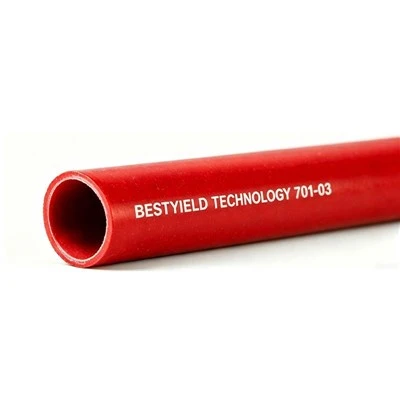
If you’re not sure what you need, don’t guess. Reach out to a supplier who knows MVQ inside and out, someone who’s not just selling hoses but has the experience to walk you through the options. We’ve worked with everything from small boutique aerospace companies building prototype parts to large automotive manufacturers rolling out new truck lines, and we’ve learned that the best decisions come from asking the right questions, not just picking a random number. Whether you need a hose for a food processing line, a race car engine, an industrial oven, or a medical device, we can test formulations, run accelerated aging tests, and give you an exact elongation at break number that fits your job perfectly. Don’t let a bad hose cause downtime or lost product—reach out to us to discuss your MVQ Hose requirements, and we’ll help you find the right solution for your needs.
HNBR Hose References
- Mark, J. E. (2007). Science and Technology of Rubber. Academic Press.
- ISO 37:2011, Rubber, vulcanized or thermoplastic — Determination of tensile stress-strain properties. International Organization for Standardization.
- Drobny, J. G. (2015). Silicone Elastomers: Properties, Applications, and Processing. Smithers Rapra.
- Society of Automotive Engineers (SAE) J200, Rubber Hoses for Automotive Applications. SAE International.
BESTYIELD Technology (Huizhou) Co., Ltd.
BESTYIELD Technology (Huizhou) Co., Ltd. is one of the most professional mvq hose manufacturers and suppliers in China, featured by quality products and good price. Please rest assured to buy durable mvq hose made in China here and get quotation from our factory. Customized orders are welcome.
Address: Yinshan Industrial Zone, Liangjing Town, Huiyang District, Huizhou City, Guangdong Province
E-mail: rick@bestyield.net
WebSite: https://www.bestyield.org/
