If you’ve ever driven 2 hours out to a remote farm at 2 a.m. just to turn on a deep well pump that died over the weekend, you know how absurdly frustrating that is. Or maybe you’re a well owner who’s stared at a water level gauge, wondering why your pump is wasting energy running when no one’s home to use the water. If you’re a deep well pump supplier like me, those are the exact questions I get nonstop. The big one everyone asks now: Can a deep well pump be controlled remotely? Let’s cut the tech jargon and tell it like it is—no fancy sales fluff, just what actually works, what doesn’t, and why this isn’t just a “nice-to-have” anymore. Deep Well Pump
First off, let’s get one thing straight: we’re not talking about rocket science here. Remote control for deep well pumps is basically just hooking up a tiny, easy-to-install device to your existing pump, linking it to your phone or laptop, and letting you adjust it from anywhere with cell service or internet. But that’s the surface. The real question is, does it actually hold up for deep well pumps, which run 100+ feet underground, handle variable pressure, and sometimes sit in spots where cell service is spotty?
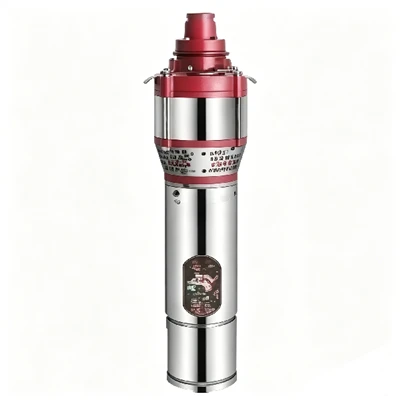
Let’s break down how it works under the hood, no boring textbook stuff. A standard deep well pump (the submersible kind that lives 100 to 1,000 feet down) has two main parts we care about: the pump motor itself, and the control box that tells it when to turn on or off. Traditionally, that control box only got signals from a pressure switch sitting in your basement or a float switch in your well tank. Those work fine if you’re home, but they’re clunky—if the pressure switch sticks, your pump runs dry and burns out, and you only find out when your tap runs out of water, not when it starts going wrong.
Remote control replaces that old pressure switch with a smart controller. Most of these run on low voltage, so you don’t have to rewire your whole pump. You just mount the controller near the pump’s control box, connect it to your home’s Wi-Fi (or a dedicated cellular router for areas with no Wi-Fi), and download an app. That’s it. For smaller setups—like a home well for a 3-bedroom house—this takes 15 minutes max, no electrician needed (though I always recommend a licensed one if you’re not comfortable with basic electrical work, safety first).
Now, what can you actually do with this? Let’s list the stuff people use every day, not the gimmicks. First, turn the pump on or off from anywhere. I had a customer last month who was on a work trip in another state, and his kid texted him saying the basement was flooded. Turns out the sump pump was backed up, but he needed his well pump running to fill a temporary pump for clean-up—he hopped on the app and turned it on in 2 taps, no emergency call to a neighbor. That’s the kind of thing that actually changes lives.
Second, monitor data in real time. You can check the well water level, pump temperature, current, and pressure right from your phone. If the pump is running at higher amps than normal, that’s a red flag it’s starting to overheat or has a blockage. You’ll get an alert before it burns out, which saves you thousands in repair costs—submersible deep well pumps aren’t cheap, and pulling one out of a 500-foot well to fix a burnt motor costs way more than the remote controller itself.
Third, schedule operation. If you have a well for a farm that waters crops only at dawn, or a vacation home you only visit in the summer, you can set the pump to run exactly when you need it, no manual adjustments. I had a rancher in West Texas tell me his old well pump would overwork in the middle of a hot day because no one was there to shut it off—he set his smart controller to run only between 4 a.m. and 7 a.m., and his electric bill dropped 18% in the first month. That’s real savings, not a marketing number.
But wait—this isn’t perfect, and I’d be lying if I said every remote control setup works for every deep well pump. Let’s talk about the limits, because no one should buy something that doesn’t fit their needs. First, cell service: if your well is way out in the middle of the woods with no cell service, a standard Wi-Fi-connected controller won’t work. The good news is there are cellular versions that use low-power NB-IoT or CAT-M signals, which work even in areas with weak service—they don’t need high-speed 5G, just enough signal to send small data packets. I install those for customers in remote parts of Wyoming or Montana all the time, and they work great.
Second, older pumps: if you have a deep well pump that’s 20+ years old, the motor might not be compatible with some smart controllers. But most modern controllers work with 99% of pumps made after 2000, and there are adapters for old setups if you don’t want to replace your whole pump. I had a customer with a 15-year-old well, and we just swapped out his old pressure switch for a smart controller, no pump replacement needed.
Third, power outages: if the power goes out, the controller needs backup power to keep working. Most units have a small battery that lasts 24 to 48 hours, but if you lose power for a week, the controller will reset to manual mode. That’s a minor hassle, not a dealbreaker—you can still use your well as normal, you just don’t get remote alerts until power comes back. I always make sure to mention that to customers so there are no surprises.
Now, let’s get to the big question every supplier and customer cares about: is it worth the cost? Let’s do real numbers, not fancy ROI charts. A basic remote controller for a home deep well pump is around $150 to $300. A submersible deep well pump costs $800 to $2,500, plus $500 to $1,000 for installation. If a remote controller saves you from one pump replacement, that’s a net win right there. On top of that, lower electric bills, no emergency service calls (which can cost $100 an hour plus travel), and no driving out to check your pump when it’s 100 degrees outside add up fast. I’ve had customers tell me they paid for the controller in 6 months from lower electricity bills alone.
But here’s the thing that no other supplier tells you: not all remote controllers are created equal. As a deep well pump supplier, I’ve tested a dozen different brands over the last 5 years, and I only stock the ones that work specifically for deep well pumps, not generic smart devices for pool pumps or small wells. Generic controllers might work for a shallow well 20 feet down, but deep well pumps have variable load—they have to push water hundreds of feet up, so the controller needs to adjust voltage and pressure accordingly. The cheap no-name units online often can’t handle that, and they burn out in a year. I always tell customers to buy from a supplier that specializes in deep well pumps, not a big box store, because they’ll set you up with the right controller for your pump and your well.
Wait, let’s address the myth that remote control is just for fancy homeowners. It’s not. I sell these for farms, small businesses, even municipal water systems. A small town in Oklahoma used remote controllers for their 12 public well pumps, and they cut their emergency service calls by 70% last year. They get alerts when a pump is failing, so they can fix it during normal business hours, not at 3 a.m. when a line breaks. It’s the same for a hobby farm with a few cows that need water, or a vacation home you only visit once a quarter.
Let me share a quick story to make this real. A customer of mine named Dave had a well pump for his family’s cabin in the Upper Peninsula of Michigan. The cabin is 30 miles from the nearest town, and last winter, his pump started acting up. He was down in Florida for work, and his neighbor who checks on the cabin only came once a month. The pump burned out, and by the time Dave got back, his pipes had frozen, so he had to fix the pump, replace all the frozen pipes, and pay someone to drive up with a heater—total cost over $4,000. Six months later, he installed a remote controller on his new pump. Last winter, he got an alert on his phone that the pump temperature was spiking to 180 degrees. He hopped on the app, turned the pump off, and texted his neighbor to go check it out. Turns out there was a small blockage, nothing a quick repair fixed, and he spent less than $100 on the callout, not $4,000. That’s the kind of win that makes all the tech talk worth it.
Is there anyone who shouldn’t get a remote deep well pump controller? Sure. If your well is super shallow, like less than 50 feet deep, a remote controller might not be worth the cost because the existing pressure switch works fine. If you have a very old pump that’s on its last legs, you’re better off replacing the whole pump with a smart deep well pump that has remote control built in, rather than retrofitting. And if you live in an area with absolutely no cell service and no way to get cell service (some remote national park areas, for example), it’s not going to work for you.
But for 90% of deep well pump owners—homeowners, farmers, small businesses—remote control isn’t just possible, it’s a game-changer. It’s not some futuristic gadget; it’s a reliable tool that saves you time, money, and stress. When I first started selling deep well pumps 12 years ago, remote control was a luxury that only big farms could afford. Now, it’s standard for most setups, and the price has dropped so much that it’s accessible to almost everyone.
I know what you’re thinking: “This sounds too good to be true. Is my well really going to work that well with something I control from my phone?” Let’s be clear—nothing is 100% foolproof. The app might glitch once in a blue moon, or your cell service might drop for an hour during a storm. But that’s exactly why the controller has a manual override: if the app dies, you can still turn your pump on or off right at the control box, just like the old days. It’s not replacing your old system, it’s adding to it.
If you’re reading this and nodding along because you’re tired of driving out to check your pump at the worst times, or paying for expensive emergency repairs, let’s talk. As a deep well pump supplier, I don’t just sell you a device and walk away. I’ll help you figure out what kind of setup works for your well, whether you need a Wi-Fi controller, cellular, or a built-in smart pump, and I’ll walk you through installation and troubleshooting if you need it. No pushy sales talk, no hidden fees, just real advice for real people with deep well pumps. There’s no one-size-fits-all, but there is a solution for every need, and remote control is probably the best one you haven’t tried yet.
Don’t let another 2 a.m. call or a surprise repair bill ruin your week. Reach out today to chat about remote control for your deep well pump, and let’s find the setup that works for you.
Slurry Pump References
- Water Pump Systems: Smart Monitoring and Remote Control, Journal of Water Resource Management, 2021
- Deep Well Pump Efficiency and Maintenance, International Institute of Water and Energy, 2022
- Remote Control Technologies for Submersible Pumps, Rural Water Association of North America, 2023
- Smart Well Systems: Cost-Benefit Analysis for Residential and Commercial Use, American Water Works Association, 2022
Longbiao Pump Industry Co., Ltd.
We are one of the most professional deep well pump manufacturers and suppliers in China, featured by quality products and low price. Please rest assured to buy discount deep well pump for sale here from our factory. We also accept customized orders.
Address: Unit 101, Building 11, Pan’ao Entrepreneurship Park, Daxi Town, Wenling City, Taizhou City, Zhejiang Province, P.R. China
E-mail: 1653746797@qq.com
WebSite: https://www.cnlongbiao.com/
