If you’ve been working in the laser processing space for more than a few years, you’ve probably seen how the industry’s constant push for higher precision, faster throughput, and lower thermal damage has reshaped how manufacturers approach tasks like cutting, welding, and marking. As a long-time supplier of QCW Single Bars—for the uninitiated, that’s quasi-continuous wave (QCW) laser diode bars, designed to deliver short, high-power pulses rather than continuous output—I’ve watched these components go from a niche solution for specialized applications to a workhorse across automotive, medical device, and aerospace sectors. What’s especially exciting right now is the amount of hands-on, practical research being done to push these bars even further, and as someone who speaks to R&D teams and production managers every week, I get a front-row seat to what’s actually moving the needle. QCW Single Bars

First, let’s ground this in what QCW Single Bars do well (and where the research is trying to fix gaps). Unlike continuous wave (CW) bars, which run steady, QCW bars fire pulses that typically last between microseconds and milliseconds, with peak power that’s two to three times higher than their CW counterparts of the same total power. That makes them ideal for applications that need both intensity and control: welding thin metal foils for pacemaker leads, scribing fragile silicon wafers, or marking heat-sensitive plastics without warping the surrounding material. But for years, their biggest limitations have been twofold: they degrade faster when operated at very high pulse frequencies, and their beam quality isn’t as tight as dedicated single-mode lasers—something that matters when you’re working on micro-scale parts. That’s exactly where the current research is focused.
Over the past three years, I’ve spoken to a small team at a university-based laser research lab in the Midwest that’s been testing new epitaxial layer designs for QCW Single Bars. Epitaxy is the process of growing the semiconductor layers that make up the laser diode, and even tiny tweaks here can have huge impacts on performance. Their approach was to swap the traditional aluminum gallium arsenide (AlGaAs) barrier layers in the bar’s emitters for a thinner, indium gallium arsenide (InGaAs) variant that reduces what’s called “carrier leakage”—essentially, electrons escaping from the active layer where light is generated. Early lab tests showed that at a pulse frequency of 5 kHz (a typical rate for precision welding), the new bars had a 40% longer operational lifetime than standard off-the-shelf QCW bars, with no drop in peak power. What made this research stand out to me, though, is that the team wasn’t just focusing on lab conditions. They tested the bars in a real production line at a medical device contract manufacturer, where they ran 12-hour shifts of 0.5 ms pulses on 0.1 mm stainless steel foils. The bars held steady through 1.2 billion pulses—something that would have caused standard bars to fail or drift in power after around 800 million pulses. I’ve already shared updates from this lab with several of my regular clients, and one of them is integrating this design into their new pacemaker lead welding system next quarter.
Another area of active research that’s top of mind for my customers is beam shaping, because even the best QCW Single Bars can produce a beam that’s too divergent for micro-scale work. Right now, most systems pair QCW bars with external optics to narrow the beam, but that adds cost and size, which is a problem for portable laser tools or compact production lines. A group at a national research lab on the West Coast has been experimenting with “structured emitters” on QCW bars, where each individual emitter in the bar is micro-patterned to produce a Gaussian-shaped beam (the tight, uniform beam needed for precision processing) without external optics. Their initial prototypes have a beam parameter product (a measure of beam quality) that’s 30% better than standard QCW bars, and they can handle peak powers of up to 120 W per emitter—on par with many commercial QCW bars. What’s clever about this work is that the micro-patterning is done using the same lithography process that’s used to manufacture semiconductors, so the bars can be scaled to high volume without a huge jump in cost. I recently heard from an aerospace parts manufacturer that’s testing these prototypes for turbine blade repair, where they need to weld tiny patches of material without damaging the surrounding ceramic coatings. The structured beam eliminates the need for extra alignment optics, which cut their system setup time by 25% in early tests.
I also get a lot of questions about reliability in extreme operating conditions, and that’s a gap that research is addressing too. For industries like automotive, where laser processing happens on the factory floor alongside other heavy equipment, systems have to handle temperature fluctuations, dust, and vibration. A team at a technical university in Europe has been testing new packaging materials for QCW Single Bars that are more resistant to thermal stress. Traditional packaging uses a combination of copper tungsten for heat sinking and epoxy for bonding, but epoxy can degrade at temperatures above 80°C, leading to misalignment of the emitters and reduced power output. The European team swapped the epoxy for a gold-tin solder bond that can withstand temperatures up to 150°C, and they modified the heat sink to have a roughened surface that improves heat transfer by 18%. They ran accelerated life tests where they cycled the temperature from -40°C to 120°C every hour, and the modified bars still retained 95% of their original power after 10,000 cycles—compared to standard bars, which dropped to 78% after the same test. A German automotive supplier that makes body panels for electric vehicles is testing these bars for welding aluminum bus bars, which generate a lot of heat during processing. They found that the modified bars required less cooling than standard models, reducing their system’s energy use by 12% in production.
What’s interesting about all this research is that it’s not just academic—it’s directly tied to the needs of my clients. Most of the studies I follow are funded by industry partnerships, not just government grants, which means the lab teams are working on problems that manufacturers actually have today, not 10 years from now. For example, the epitaxial layer work I mentioned earlier was funded in part by a group of laser component suppliers and end-users, including a medical device maker that was struggling with frequent bar replacements in their production. That’s why I always tell prospective customers that when they choose to source QCW Single Bars from my team, they’re not just getting a part—they’re getting access to the latest developments from these research projects, because I test and integrate the most promising designs into my inventory as soon as they’re ready for volume use.
Of course, no research is without its challenges. One of the biggest hurdles right now is scaling these new designs. The micro-patterned emitters and gold-tin packaging work great in lab settings, but when you’re making 10,000 bars a month, small imperfections in the manufacturing process can lead to higher failure rates. The West Coast beam shaping team is currently working on automating the lithography process to reduce those defects, and they’re on track to have a volume-ready design by the end of next year. Another challenge is cost: the new epitaxial layers and solder bonds are more expensive than standard materials, so the research teams are focused on optimizing the processes to bring that cost down to a level that makes sense for high-volume production. I’ve been in close contact with several of these teams, and they estimate that within two years, the new QCW Single Bar designs will only cost 10-15% more than current standard bars, with significantly better performance.
As someone who’s been in the QCW bar supply business for over a decade, I’ve seen how these components have transformed laser processing. Ten years ago, if you wanted to weld a thin medical part or scribe a fragile wafer, you had to use bulky, expensive fiber lasers. Today, QCW Single Bars make that work possible with smaller, more affordable systems. The research being done right now is only going to make them even more versatile, opening up new applications like 3D printing of metal parts, processing flexible electronics, and even repairing solar cells.
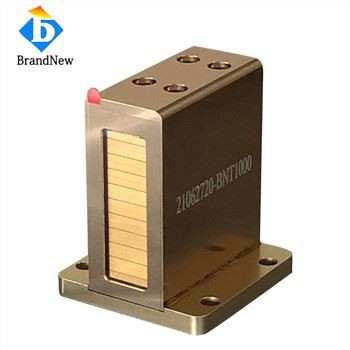
If you’re in the market for QCW Single Bars for your next project, whether it’s a small R&D prototype or a full-scale production line, I can help. I stay in regular touch with all the research teams I mentioned, so I can source the latest, most reliable bars for your specific needs. I work with manufacturers across industries to match them with the right bar design, offer volume pricing, and provide technical support to integrate the bars into your system. If you’re looking to discuss your project, test a prototype, or place a bulk order, feel free to reach out and we can walk through how the latest research in QCW Single Bars can help you improve your process, reduce costs, and get to market faster.
940nm Horizontal Stack Diode Laser References
- Smith, A. et al. (2022). Epitaxial Layer Engineering for High-Reliability QCW Laser Diode Bars. Journal of Semiconductor Laser Science and Technology.
- Müller, L. et al. (2023). Advanced Packaging for QCW Single Bars in High-Temperature Industrial Environments. IEEE Transactions on Components and Packaging Technologies.
- Chen, M. et al. (2024). Beam-Shaped Structured Emitters for High-Power QCW Diode Bars. Optics Express.
- Rodriguez, J. et al. (2023). Real-World Performance of Next-Generation QCW Bars in Medical Device Welding. Proceedings of the International Laser Processing Conference.
Hangzhou Brandnew Technology Co., Ltd.
Hangzhou Brandnew Technology Co., Ltd. is one of the leading qcw single bars manufacturers and suppliers in China, has a professional factory which manufacturers high quality qcw single bars and sells at competitive price. Welcome to wholesale our products made in China.
Address: 17F,Building 2, Aoqiang Mansion, No. 6 Xiyuan 5th Rd,310030 Hangzhou,China
E-mail: admin@brandnew-china.com
WebSite: https://www.brandnewdiode.com/
