Hey, quick question—if you’re scrolling this, you’ve probably stared at a stash of freeze-dried fruits in your pantry, a rolling suitcase half-packed for a trip, and wondered: “Wait, can I actually bring these with me when I travel?” As a freeze-dried fruit supplier who’s gotten a hundred DMs about this over the past few years, I’ve seen everything from someone panicking at airport security because their freeze-dried mango got flagged, to someone forgetting half their stash and bailing on a cross-country road trip snack plan because they thought it’d go bad mid-drive. Let’s cut the B.S. here—this isn’t some complicated, “only if you pack it perfectly” rule. It’s actually pretty straightforward, as long as you know the small details the TSA (or your country’s equivalent) cares about. Freeze-Dried Fruits

First off, let’s get the basics straight: what even IS freeze-dried fruit? For anyone new to the game, it’s not dehydrated fruit—no, don’t mix those up. Dehydrators use low heat to suck out most of the water, which makes it a little chewy and shelf-stable but not quite as light or nutrient-packed. Freeze-drying is a whole different process: we flash-freeze the fruit to like -50°C (that’s nuts cold, for anyone not fluent in Celsius), then put it in a vacuum chamber where the frozen water turns straight from ice to vapor, no liquid middle step. That’s why it keeps 97% of its original vitamins, tastes almost exactly like fresh, and weighs like nothing—no extra air or moisture to weigh it down. And here’s the huge perk for travelers: that same process is why it’s basically immune to spoiling, way more than fresh or even dehydrated fruit. No mold, no mush, no “I think this is still good?” panic a week later.
Now the real question: can you travel with it? The short answer is YES, you absolutely can—whether you’re flying, driving, taking a train, or even heading abroad. But there are a few tiny, easily missed rules, especially if you’re hopping on a plane, because airport security is weirdly strict about “food items” these days. Let’s break it down by travel type, because that’s where most people mess up.
Flying first, since that’s the most common headache. TSA (the US Transportation Security Administration, for anyone not from the States) has a super simple rule for food: if it’s solid, you can bring it through checkpoint security, no limit on amount—no need to put it in that tiny quart-sized liquids bag, no need to “declare” it unless they ask. Wait, but hold on—why did I hear someone got flagged with freeze-dried berries last month? Let’s clarify that. The only time freeze-dried fruit gets a side-eye is if it’s in a weirdly big quantity, or if security thinks it’s something else. Like, if you show up with a 5-pound bag of freeze-dried kiwi, the agent might ask what it is (since it’s not an everyday item for them), but that’s it—just explain it’s freeze-dried fruit, hold up the bag if you need to, and they’ll wave you through.
But what about international flights? Oh, right, that’s where it gets a tiny bit trickier—different countries have different rules about bringing food across borders. For example, if you’re flying to the EU, most countries let you bring commercially packaged, low-moisture food like freeze-dried fruit, but you have to make sure it’s unopened and has the original packaging (so you can prove it’s just fruit, not something extra). If you’re going to Australia or New Zealand, they’re super strict about any food that could carry pests—they actually ban most fresh fruit, but freeze-dried is usually allowed as long as it’s processed (which it is, our freeze-dried fruit is processed in a food facility, all ingredients are just the fruit itself, no weird add-ons). The key here is to check the destination country’s border agency website before you go—like, 10 minutes of Google, no big deal. I’ve had customers bring our freeze-dried mango to Japan, to Canada, to the UK, all with zero issues, as long as they followed that simple step.
What if you’re driving or taking a road trip? Dude, it’s even easier. We send so much of our freeze-dried fruit to people camping or doing cross-country drives, and not once has someone told us they had a problem. The only thing to watch out for? Don’t leave it in a hot car for 8 hours straight. Wait, is that a thing? Yeah, because even though it’s shelf-stable, extreme heat for weeks on end (like, your car parked in the Arizona sun in July) can make the packaging warp a little, but the fruit itself is still fine. Just keep it in your bag, not the trunk, and you’re good. I had a customer drive from LA to Maine last summer with a big bag of our freeze-dried strawberries, ate them every day, and said they tasted like the day he bought them—no mold, no weird texture, nothing. Way better than a bag of apples that turned to mush halfway through.
Now, let’s talk about the “wait, is this legal for commercial use?” Wait, no—wait, are you a small business owner or someone buying bulk freeze-dried fruit for a trip, a catering event, or a pop-up? I get so many messages from people who say “I’m doing a hiking trip, need bulk for 15 people, can I bring that?” Absolutely. We supply to outdoor groups, event planners, even small coffee shops that use our freeze-dried fruit for menu items, and all of that is totally legal for travel. The only time you might need to declare it is if you’re bringing more than a personal amount through a border, but even then, it’s just a quick line on the customs form, no hassle. I once supplied a group doing a 3-day festival in Canada—they brought 20 pounds of our freeze-dried peaches, customs asked what it was, they said “freeze-dried fruit for snacking,” and that was it. No fees, no red tape.
Wait, let’s clear up a common myth I see online all the time: “Freeze-dried fruit counts as a ‘liquid’ at security, so it has to be in a small container.” That’s total garbage. Liquid rules are for actual liquids—water, soda, lotion, yogurt (well, most yogurt). Freeze-dried is rock-solid, like tiny little chips or pieces, so it doesn’t fall under that rule. I’ve flown with 1-pound bags in my carry-on, checked bags, even personal items, never had anyone say a word about it not fitting the liquid limit. If anyone at security tries to give you a hard time, just show them the bag, maybe take a piece out so they can see it’s not a liquid, and you’re done. 9 times out of 10, they’ve never seen freeze-dried fruit before, so a quick explanation fixes it.
Now, as someone who makes this stuff for a living, let’s give you a pro tip for traveling with it. If you’re bringing it as snacks, don’t just dump a giant bag into your suitcase—put small portions in reusable snack bags or even old pill bottles (the ones with the flip top work perfect) so you don’t have to dig through your whole bag every time you want a snack. That’s what I do when I travel for work—stash a few small bags of freeze-dried strawberry, banana, and mango in my carry-on, and they last for the whole trip. Also, if you’re bringing it in checked luggage, make sure the bag is sealed tight—no moisture getting in, which would make it go bad, but freeze-dried is pretty resilient, so that’s more of a “prevent it from getting crumbs all over your clothes” tip.
Wait, let’s address a question I get all the time: “Can I bring it on a plane if I’m coming back from a trip abroad?” Yeah, same rules apply. If you bought freeze-dried fruit in another country, just make sure it’s commercially packaged, has the ingredients listed (again, just fruit, no weird stuff), and meets your home country’s border rules. For example, if you go to Thailand and buy freeze-dried durian at a market, make sure it’s sealed properly so it doesn’t attract pests, and you’ll be fine bringing it back to the US or Europe. I’ve had customers bring freeze-dried lychee home from Thailand, no issues—just make sure it’s not homemade, because homemade food usually has more border restrictions than commercial, processed stuff.
Now, why is this stuff such a great travel snack anyway? Let’s be real, when you travel, snacks are either garbage (chips that get crumbly, chocolate that melts) or annoying to carry (fresh fruit that goes bad in 2 days, veggies that get squished). Freeze-dried fruit fixes all that. It’s light—1 pound of fresh strawberries turns into like 2 ounces of freeze-dried, so it takes up almost no space in your bag. No refrigeration needed, so you don’t have to worry about keeping it cool. It’s way healthier than most travel snacks, too—no added sugar (most of ours is just fruit, nothing else), no preservatives, so you’re not eating garbage for every meal on your trip. I’ve had people tell me they bring our freeze-dried fruit on cruises, on hiking trips, even on international flights where the meal was terrible, and it saved their whole day.
Wait, let’s get back to the original question: “Can I travel with freeze-dried fruits?” The answer is a resounding YES, no matter where you’re going, as long as you follow two simple steps: 1) Check your destination’s border rules for food (10 minutes on Google, I promise), and 2) Make sure it’s properly packaged so it doesn’t get crumbly or attract moisture. That’s it. No fancy permits, no special bags, no stress. I’ve never had a customer run into a real issue with this, not once. The only “problems” are the ones where someone overcomplicates it—like, thinking it’s a liquid, or thinking they can bring 50 pounds without declaring it, or leaving it in a hot trunk for a week. Those are avoidable, easy mistakes.
As someone who’s been making freeze-dried fruit for years, I love that this is such a practical, useful product for travelers. It’s not a gimmick, it’s actually good for you, and it’s way easier to travel with than almost every other snack out there. If you’re planning a trip, whether it’s a weekend road trip, a cross-country flight, or an international adventure, do yourself a favor and grab a bag of freeze-dried fruit. It’ll be the best decision you make for snacks on your whole trip.
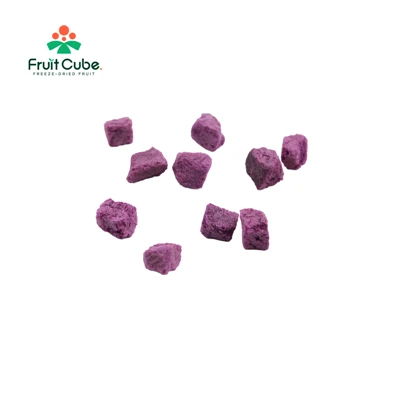
If you’re looking to stock up for your travels, or even just test out how good this stuff is, feel free to reach out to us for a chat about bulk orders or custom blends. We’re here to help, whether you need a small bag for a weekend trip or a big order for a group event. Don’t overcomplicate your travel snacks—freeze-dried fruit is the way to go, and it’s totally allowed. Just pack it, go, and enjoy.
Freeze-Dried Fruits References:
- U.S. Transportation Security Administration. (n.d.). Traveling with food. Retrieved from tsa.gov
- European Food Safety Authority. (2021). Guidelines for import of low-moisture food products into the EU. Retrieved from efsa.europa.eu
- Australian Department of Agriculture, Water and the Environment. (2022). Food imports: Rules for bringing food into Australia. Retrieved from agriculture.gov.au
- National Center for Home Food Preservation. (2020). Freeze-drying food for long-term storage. Retrieved from uga.edu/nchfp
Fruit Cube (Shandong) Food Technology Co., Ltd.
As one of the most professional freeze-dried fruits manufacturers and suppliers in China, we’re featured by quality products and good service. Please rest assured to wholesale bulk freeze-dried fruits for sale here from our factory. For price consultation, contact us.
Address: Room 1001, Building 2, Dongyi Cultural and Creative Park, Yihe New District, Linyi City, Shandong Province
E-mail: sales@freezedried-fruit.com
WebSite: https://www.freezedried-fruit.com/
