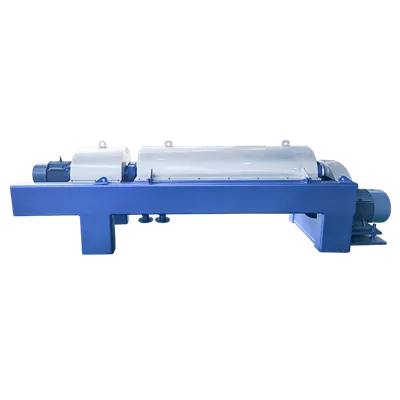
Hey there, let’s cut to the chase if you’re shopping for a 3 phase decanter centrifuge— I’m on the front lines selling these things, and I’ve seen way too many folks pick the wrong unit because they skipped a few key checks. This isn’t just a “big centrifugal machine” for separating oil, water, and solids from slurries; it’s a make-or-break piece of kit for sectors like wastewater, food processing, oil & gas, and biotech. Mess this up, and you’re staring at downtime, bad separation results, or a machine that’s underperforming before it even hits your facility. Let’s walk through the actual factors I (and my team of engineers) drill into with every customer, no corporate fluff—just real, usable stuff. 3 Phase Decanter Centrifuge
First up: what exactly are you separating? 3 phase decanters aren’t one-size-fits-all. Let’s say you’re handling agricultural oil, like canola or olive oil, with a solid slurry mixed in vs. treating produced water from a fracking site—those are totally different feeds, and the machine needs to match. I had a customer last quarter who bought a generic unit meant for wastewater and tried to use it for biodiesel feedstock; the solid bowl was too wide, so light oil was getting dragged into the heavy water stream. Oops. The key here is specifying the feed’s properties upfront: density of each phase (oil, water, solids), particle size of the solid gunk, solids concentration in the mix, viscosity, and even temperature—if your feed’s super thick (like crude oil at room temp) vs. thin (like municipal sewage), that changes everything. We always ask for a lab sample if we don’t have past data, because running a small test on our pilot units tells us way more than spec sheets. Speaking of specs, don’t just rely on manufacturer numbers—ask for third-party test results for your specific feed, not a generic “slurry.”
Next, capacity is non-negotiable, and it’s not just about “how much it can process per hour.” A lot of customers come in saying “I need 50 gpm” but fail to mention that number is peak demand, not average. If you size for peak and only run at half capacity day-to-day, the centrifuge’s efficiency drops like a rock—solids won’t dewater right, oil gets trapped, and you’re wasting power. On the flip side, if you size too small, you’re overloading it constantly, leading to frequent belt replacements, bowl wear, and 2AM maintenance calls. We also factor in feed variability: if your stream jumps from 30 to 70 gpm randomly, you need a unit with variable drive speed (not just a fixed speed motor) to adjust in real time. I recommend mapping your 24-hour, weekly, even monthly flow rates—don’t just use a single number. And don’t forget future growth! If you’re expanding your operation in 2 years, don’t buy a unit that maxes out today. We love when customers tell us their 3-year plan; we can tweak the model to handle that extra capacity without overspending upfront.
Then there’s the design of the decanter itself, and this is where cheap vs. quality hits hard. Let’s break down the key parts: the bowl, the screw conveyor (the “scroll” that pushes solids out), and the drive system. First, the bowl diameter and length-to-diameter (L/D) ratio. Higher L/D ratios (like 3:1 to 4:1) are better for finer solids or slower, more precise separation—they give more residence time for phases to separate. Lower L/D (2:1 to 2.5:1) is good for high-flow, high-solids feeds where speed is key. I had a customer in the food industry (they process citrus, actually) who had a low L/D unit and was losing way too much essential oil in the solid waste. Switched to a 3.5:1 L/D unit, and their oil recovery went up 18%—game changer. Now, the material of construction: if your feed has corrosive stuff—like saltwater, acidic wastewater, or oil with high sulfur—you can’t use plain carbon steel. We use duplex stainless steel or even high-alloy steel for corrosive applications; plain steel will pit, crack, and need replacement in 1-2 years vs. 10+ years for the right alloy. Also, the scroll flight surface—wear-resistant coatings, like ceramic or carbide, are a must if you’re dealing with abrasive solids (like sand from frac flowback). Without that, the scroll wears down in a year, and you’re looking at $20k+ in repairs.
Drive systems are another big one, and most customers don’t ask enough about this. There are two main types: mechanical drive and hydraulic drive. Mechanical drives (usually with a gearbox or variable frequency drive, VFD) are more efficient for steady, high-capacity operations—they use less power, easier to maintain. Hydraulic drives are better for variable speed, high-torque applications, but they’re less efficient and can have more maintenance (oil leaks, hydraulic parts wearing). I usually recommend mechanical drives for most standard 3 phase apps, but if your feed has fluctuating solid loads that need the scroll speed to change a lot, hydraulic might be the better call. Also, look for a differential speed adjustment—this is how fast the scroll turns relative to the bowl. Adjustable differential speed lets you tweak how much solids are pushed out, which is critical for matching separation results to your needs. For example, if you want drier solids, you increase the differential speed so the scroll pushes solids out faster, dewatering them more. Fixed differential speed units are cheaper, but way less flexible if your feed changes.
Now, operational and maintenance (O&M) costs—this is the hidden factor that trips up even experienced operators. A $50k unit might look like a steal, but if it uses 2x more power, needs $10k in annual wear parts, and has to be taken apart for cleaning every 8 hours, it’s way more expensive long-term than a $70k unit that’s 10% more efficient, has longer wear life, and can run 24 hours between cleaning. We always sit down with customers and do a 3-year O&M cost breakdown, not just the upfront purchase price. Things to factor here: power consumption (look at the motor size and efficiency—IE3 motors are way more efficient than older IE1 units), wear part replacement frequency (scroll flights, bowl liners, seals), cleaning requirements (self-cleaning designs or open frames that are easy to access? Open frames are way cheaper to clean and maintain than fully enclosed ones for small operations), and spare parts availability. If you buy a cheap off-brand unit, getting spare parts in a pinch can take weeks, and you’ll have to pay premium prices. We keep common wear parts in stock 24/7, so if a seal goes out at 2AM, we can ship it same-day.
Compliance and regulatory stuff—you can’t ignore this, especially if you’re in food, pharma, or wastewater that needs to meet EPA, FDA, or ISO standards. For food-grade applications, the unit has to be made with materials that are FDA-approved for food contact, and easy to sanitize without crevices where bacteria can grow. For example, we make our food-grade 3 phase decanters with smooth, rounded welds, no dead zones, and parts that are easy to take apart and wash down with pressure. If you’re in oil & gas, you might need units that meet API standards for handling produced water or crude oil. Cutting corners here can lead to failed audits, fines, or even being shut down. I once had a small brewery customer who bought a cheap unit that wasn’t FDA-compliant; their state health inspector flagged it, and they had to replace it 6 months later—total waste of money.
Ease of use—don’t sleep on this. If your operators aren’t tech-savvy, a super complex unit with 20 different settings will cause headaches, wrong adjustments, and bad results. We offer options for simple, pre-programmed controls for standard feeds, or more advanced PLC controls if you have a team that can handle it. Also, setup time—can you get the unit installed and running in a day, or does it take a week? Skid-mounted units (where the centrifuge, motor, and controls are all pre-assembled on a single steel skid) are way faster to install than ones you have to piece together on-site. Most of our standard models are skid-mounted, which cuts installation time by 70% vs. custom-built units.
Wait, let’s not forget testing and support. Before you buy, ask if the supplier can do a test run with your actual feed on their pilot equipment. That’s non-negotiable, in my book. We have a test facility where customers can bring their feed, run it through our decanters, and see exactly what separation results they’ll get—like how clean the water is, how much oil is recovered, and how dry the solids are. No more guessing from spec sheets. Also, post-purchase support: do they offer on-site startup training, 24/7 tech support, and maintenance plans? We provide a 1-year warranty on all parts and labor, and our service techs can be on-site anywhere in North America within 48 hours. I’ve seen customers buy from suppliers that ghost them after the sale, and that’s a nightmare when your machine goes down in the middle of a production run.
Let me wrap this up with a quick real example that sums all this up. A customer in the vegetable oil processing industry came to us 6 months ago. They first looked at a generic unit online for $45k, but when we dug into their feed (soybean oil with 8% solids, 100 gpm flow, needed food-grade compliance), we realized that generic unit had a low L/D ratio, carbon steel construction, fixed differential speed, and no FDA approval. We showed them our $68k food-grade model that had a 3.2:1 L/D, duplex stainless steel, adjustable differential speed, FDA approval, and a skid mount. They were worried about upfront cost, but we did a breakdown: their O&M costs would be 30% lower, oil recovery would go up 15%, and installation time was half. They bought it, and now their solids waste is so dry they can sell it as animal feed, covering part of the machine cost. That’s the difference between checking specs on a website and actually considering all the factors that matter.
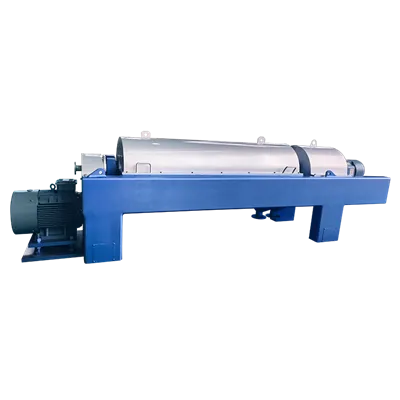
If you’re in the market for a 3 phase decanter centrifuge, don’t just go for the cheapest option or the biggest number in a spec sheet. Think about your feed, your capacity needs (including growth), the design materials that’ll hold up, drive systems that fit your operation, long-term O&M costs, regulatory rules, how easy it is to use and maintain, and the support you’ll get after delivery. And if you want to run a test on your actual feed, or talk through your specific needs, reach out to my team. We’re here to help you pick a unit that works for your process, not a one-size-fits-all that’ll cause more problems than it solves.
2 Phase Decanter Centrifuge References
- Gimbun, J., et al. (2019). Solid-liquid separation using decanter centrifuges: A review of design and operational considerations. Separation and Purification Technology, 210, 866-881.
- American Petroleum Institute (API). (2020). Specification 611: General Purpose Steam Turbines for Petroleum, Chemical, and Gas Industry Services.
- U.S. Food and Drug Administration (FDA). (2021). Food Contact Materials: Compliance Policy Guide Sec. 530.410 Stainless Steel.
- Awwa Research Foundation (AwwaRF). (2018). Decanter Centrifuges for Biosolids Dewatering: Performance and Cost Considerations.
Lishui Yuanrong Environmental Protection Equipment Co., Ltd.
As one of the most professional 3 phase decanter centrifuge manufacturers and suppliers in China, we have world-leading production equipment and strong manufacturing capabilities. Please feel free to buy customized 3 phase decanter centrifuge from our factory. Also, quotation is available.
Address: Lot 6-1, Block 15, Wanyang Zongchuang City, Lishui, Zhejiang, China
E-mail: 361184920@qq.com
WebSite: https://www.yrhdc.com/
