Hey there! I’m a supplier in the PVC plasticizer business, and I’ve seen firsthand how different factors can really mess with the performance of these plasticizers. So, I thought I’d share some insights on what affects their performance. PVC Plasticizer

Chemical Structure of the Plasticizer
First off, let’s talk about the chemical structure of the plasticizer itself. The type of functional groups in a plasticizer plays a huge role. For example, phthalate – based plasticizers have been super popular for a long time. They have ester groups that can interact well with the PVC polymer chains. These interactions help to separate the PVC chains, making the material more flexible.
But then there are non – phthalate plasticizers. They have different functional groups, like adipate or citrate groups. Adipate – based plasticizers, for instance, offer better low – temperature flexibility compared to phthalates. The reason is that their molecular structure allows for more movement at lower temperatures. Citrate – based plasticizers are known for being more environmentally friendly. Their chemical structure gives them good compatibility with PVC and can provide decent plasticizing effects, but they might not be as effective as phthalates in some high – performance applications.
The molecular weight of the plasticizer also matters. Low – molecular – weight plasticizers tend to diffuse more easily within the PVC matrix. This means they can quickly plasticize the PVC, making it more flexible right away. But they also have a higher tendency to migrate out of the PVC over time. High – molecular – weight plasticizers, on the other hand, are more resistant to migration. They stay in the PVC matrix for longer periods, providing long – term flexibility. However, they might take a bit more time to fully integrate with the PVC during processing.
Compatibility with PVC
Compatibility is a big deal. If a plasticizer isn’t compatible with PVC, it’s going to cause problems. When a plasticizer is well – compatible, it can dissolve in the PVC resin during processing. This forms a homogeneous mixture, and the plasticizer can effectively reduce the glass transition temperature (Tg) of the PVC. A lower Tg means the PVC is more flexible at room temperature.
Incompatible plasticizers, though, will separate from the PVC over time. You might see a sticky or oily layer on the surface of the PVC product. This not only affects the appearance but also the performance of the material. The PVC can become brittle as the plasticizer doesn’t stay where it’s supposed to be. To check compatibility, suppliers like us often run tests. We look at how the plasticizer and PVC interact under different conditions, like high temperatures or when exposed to certain chemicals.
Processing Conditions
Processing conditions can really impact how well a plasticizer works in PVC. Temperature is a major factor. When processing PVC with a plasticizer, the temperature needs to be just right. If it’s too low, the plasticizer might not fully dissolve in the PVC. This can lead to uneven plasticization, with some parts of the PVC being more flexible than others.
On the other hand, if the temperature is too high, the plasticizer can start to break down. This can release volatile organic compounds (VOCs), which are not only bad for the environment but can also affect the properties of the PVC. For example, the PVC might become discolored or its mechanical properties might degrade.
The mixing time is also important. Sufficient mixing is needed to ensure that the plasticizer is evenly distributed throughout the PVC resin. If the mixing time is too short, the plasticizer won’t be well – dispersed, and the PVC product might have inconsistent flexibility.
Environmental Factors
The environment where the PVC product is used can have a big impact on the performance of the plasticizer. Temperature changes are a common issue. In cold environments, PVC with a plasticizer that doesn’t have good low – temperature flexibility can become brittle. This is because the movement of the polymer chains is restricted at low temperatures, and if the plasticizer can’t help with that, the PVC will crack easily.
In hot environments, the plasticizer can migrate more quickly out of the PVC. This can cause the PVC to become stiff and lose its flexibility. Humidity is another factor. High humidity can cause some plasticizers to absorb water. This can change the properties of the plasticizer and the PVC. For example, it might reduce the plasticizing effect or cause the PVC to swell.
Additives and Fillers
When we add other stuff to PVC along with the plasticizer, it can affect the plasticizer’s performance. Fillers like calcium carbonate are often added to PVC to reduce costs or improve certain properties like stiffness. But they can also interact with the plasticizer. If the filler has a high surface area, it can adsorb some of the plasticizer. This means there’s less plasticizer available to plasticize the PVC, and the overall flexibility of the material can be reduced.
Additives such as stabilizers are also important. Stabilizers are used to prevent the PVC from degrading during processing and use. Some stabilizers can interact with the plasticizer. For example, certain stabilizers can improve the compatibility between the plasticizer and the PVC, while others might have a negative effect.
Quality of Raw Materials
The quality of the raw materials used to make the plasticizer can’t be overlooked. If the starting chemicals for the plasticizer are of poor quality, it can lead to impurities in the final product. These impurities can affect the plasticizer’s performance. For example, they might cause the plasticizer to have a lower plasticizing efficiency or to be less stable over time.
As a PVC plasticizer supplier, we always make sure to source high – quality raw materials. We test the raw materials before using them to ensure they meet our standards. This helps us to produce plasticizers that perform well and are consistent in quality.
Conclusion
So, there you have it! A whole bunch of factors can affect the performance of PVC plasticizers. From the chemical structure of the plasticizer itself to the environmental conditions where the PVC product is used, every little thing matters.
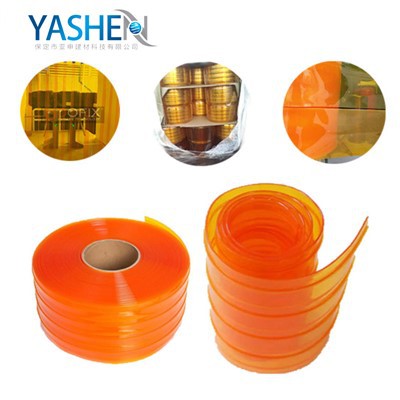
If you’re in the market for PVC plasticizers and want to make sure you’re getting the best performance for your specific application, don’t hesitate to reach out. We can work together to figure out the right plasticizer for you, taking into account all these factors. Whether you need a plasticizer for a flexible PVC product that will be used in a cold climate or a rigid PVC item that needs to withstand high temperatures, we’ve got the knowledge and the products to help. Let’s start a conversation and see how we can make your PVC products better!
PVC Strip Curtain Machine References
- "Plasticizers: Principles and Practice" by George Wypych
- "Handbook of PVC Formulating" by Edward J. Wickson
Baoding Yashen Technology Co., Ltd.
Baoding Yashen Technology Co., Ltd. is well-known as one of the leading pvc plasticizer manufacturers and suppliers in China. If you’re going to buy bulk high quality pvc plasticizer in stock, welcome to get free sample from our factory. For customized service, contact us now.
Address: Qingyuan Industrial Area, Baoding, Hebei, China.
E-mail: info@yashenchina.com
WebSite: https://www.yashenchina.com/
