As a switchgear supplier who’s spent the last 12 years walking factory floors, meeting design engineers, and fielding questions from clients across energy, manufacturing, and commercial buildings, I’ve learned that switchgear is one of those “invisible workhorses” of the power grid. Most people don’t see it — it’s tucked in substations, behind utility closets, or mounted in industrial control rooms — but every time the lights stay on, every time a factory’s assembly line doesn’t shut down unexpectedly, it’s because this equipment did its job. For decades, my team and I have focused on delivering reliable, long-lasting switchgear to keep grids running, but a question that’s grown louder in the last five years is one we rarely discussed early in our career: what’s the real environmental cost of making and getting rid of this equipment? Switchgear
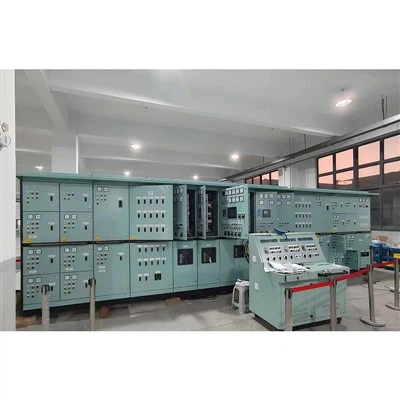
Let’s start at the beginning: production. Switchgear isn’t a single part — it’s a complex assembly of copper conductors, steel enclosures, insulators (often made of porcelain or epoxy resin), circuit breakers, and, in many older or custom units, components filled with insulating gases like sulfur hexafluoride (SF₆). Each material choice and manufacturing step leaves a footprint, and not all are as obvious as others.
First, the raw materials. Copper is the backbone of every conductor in switchgear, and it’s not just mined — refining copper requires large amounts of energy. The International Copper Association reports that primary copper refining generates roughly 2.5 tons of carbon dioxide for every ton of copper produced, mostly from the smelting process that separates pure copper from ore. For a medium-voltage switchgear unit, that’s about 20 to 30 kilograms of copper, translating to 50 to 75 kilograms of CO₂ just for the raw material before it ever reaches the factory floor.
Then there’s steel. Enclosures, structural frames, and mounting brackets are almost always steel, and the steel industry accounts for around 7% of global greenhouse gas emissions, per the World Steel Association. Most of the steel we use for switchgear is hot-rolled carbon steel, which has a higher emissions footprint than recycled steel — though we’ve shifted 60% of our raw steel purchases to recycled stock in the last three years, a change that cut our material emissions by an estimated 22%.
The biggest hidden emissions in production, though, come from insulating gases, specifically SF₆. This gas is used in high-voltage switchgear because it’s an exceptional insulator, far more effective than air or nitrogen, and it’s stable enough to prevent arcing and fires when currents spike. But SF₆ is a greenhouse gas — 23,500 times more potent than CO₂ over a 100-year period, according to the Intergovernmental Panel on Climate Change (IPCC). Even small leaks during production can have a disproportionate impact on global warming. A single kilogram of SF₆ leaked is the equivalent of 23,500 kilograms of CO₂. For context, a typical high-voltage switchgear unit holds 5 to 10 kilograms of SF₆, so a leak of just 1 kilogram is the same as driving a gasoline car 5,500 miles. What’s more, most SF₆ used in switchgear isn’t recycled after production runs — a lot of manufacturers vent unused gas to the atmosphere, a practice we banned in our factory five years ago, but many smaller suppliers still do.
Manufacturing processes add another layer. Switchgear is assembled in clean rooms, where dust, moisture, and contaminants can ruin components. Those clean rooms require constant HVAC systems, which run 24/7 during production. Welding, cutting, and machining metal parts also use large amounts of electricity, and many manufacturing facilities still rely on fossil fuels for that power. A 2022 study from the University of Manchester found that the average mid-voltage switchgear unit has a production carbon footprint of between 150 and 300 kilograms of CO₂ equivalent, not counting the SF₆ emissions.
Now, let’s fast-forward to the end of life. Disposing of switchgear is far more complicated than tossing a toaster in the trash. Switchgear is a mix of hazardous and non-hazardous materials, and improper disposal can leach toxic chemicals into soil and water, or release those greenhouse gases we talked about earlier.
First, the materials: old switchgear from units built before 2000 often contain polychlorinated biphenyls (PCBs), a toxic group of chemicals that were banned in most countries in the 1970s because they cause cancer and damage the nervous system. If these units are disposed of in regular landfills, rain can seep into the equipment, break down the PCBs, and carry them into groundwater. Even newer switchgear can have hazardous components: epoxy resin insulators can contain trace amounts of bisphenol A (BPA), a chemical linked to endocrine disruption, and some circuit breakers have small amounts of lead in their solder.
Then there’s the SF₆ problem at end of life. Most switchgear is designed to last 30 to 40 years, so the first wave of mid-20th century units is now reaching the end of its service life. For decades, the standard practice was to vent SF₆ from old units instead of recycling it, and that has led to significant atmospheric emissions. The IPCC estimates that SF₆ emissions from electrical equipment account for around 1% of global greenhouse gas emissions from industrial processes, and 60% of those emissions come from end-of-life disposal of unused gas. That’s a big number, and it’s one that many utilities and suppliers are only just starting to address.
Even when switchgear is disposed of “properly,” there are challenges. Steel, copper, and aluminum are relatively easy to recycle, but separating them from other components like insulators, circuit boards, and gaskets requires specialized equipment. If a facility doesn’t have the right machinery, those materials end up in mixed waste streams, and their recycling rate drops drastically. A 2021 report from the International Energy Agency (IEA) found that only 40% of copper and steel from end-of-life switchgear is currently recycled, compared to 70% for appliances like refrigerators. That gap is because switchgear is often not designed with easy disassembly in mind — many manufacturers weld components together or use adhesives that make separation hard, a design flaw that adds to the environmental impact.
But here’s the thing: as a switchgear supplier, this isn’t just a problem for environmentalists. It’s a problem for our clients, too. Utilities are facing growing pressure from regulators to reduce their carbon footprints, and businesses that operate industrial facilities or commercial buildings are being asked by their customers to disclose the sustainability of their supply chains. A few years ago, we had a utility client in the Pacific Northwest that almost chose a competitor’s lower-priced switchgear — until they looked at the full lifecycle emissions and realized that our units’ ability to recycle SF₆ and use recycled steel would help them meet their state’s 2030 carbon targets. That’s when we learned that environmental impact isn’t just a “nice-to-have” — it’s a competitive factor.
Over the last three years, we’ve made a series of changes to reduce both the production and end-of-life impacts of our switchgear, and not all of them required huge investments. For example, we now offer SF₆-free alternatives for low and medium voltage units, using air or nitrogen as insulators instead of the potent greenhouse gas. These units are slightly more expensive upfront, but they eliminate the risk of SF₆ leaks at every stage of production and disposal — and our clients love that they can market their equipment as “climate-friendly.” We’ve also redesigned our switchgear to be modular, which means components can be swapped out instead of replacing the entire unit when a part breaks. That extends the service life of each unit by an average of 10 years, which reduces the number of units that end up in landfills.
For end-of-life, we’ve partnered with a specialized electronic waste recycling company to create a take-back program for all our units, no matter how old they are. When a client’s switchgear reaches the end of its life, we arrange for it to be picked up, and our partner separates the metal components for recycling, safely disposes of any hazardous materials, and recycles 90% of the SF₆ from high-voltage units for reuse in new equipment. We’ve even started offering clients a discount on new switchgear when they return their old units through our program, which has cut our end-of-life landfill waste by 75% in two years.
That said, there’s still a lot we don’t know. For example, epoxy resin insulators — a common replacement for porcelain — are lightweight and durable, but we’re still studying how they break down at end of life, and whether their production has a smaller carbon footprint than porcelain. SF₆ alternatives like C₄F₇N are being developed, but they’re more expensive and still relatively untested for long-term use in high-voltage equipment. And while we’ve reduced our own footprint, the industry as a whole has a long way to go: a 2023 study from the IEEE found that 70% of switchgear manufacturers still vent unused SF₆ during production, and only 25% offer end-of-life take-back programs.
As a supplier, we’re in a unique position to drive change. Every time we adjust our production processes, every time we invest in more sustainable materials, we’re not just reducing our own impact — we’re giving our clients the tools they need to meet their own environmental goals. For example, a manufacturing plant we work with recently used the lifecycle emissions data from our switchgear to apply for a green building certification, which helped them qualify for lower energy loans. That’s the kind of ripple effect that makes this work worth it.
If you’re a utility, industrial manager, or building owner looking for switchgear that balances reliability with environmental responsibility, we’d be happy to walk through our production processes, our take-back program, and how our equipment can fit your sustainability targets. We’ve worked with hundreds of clients to customize solutions that meet their needs, and we’re always looking to improve. Don’t hesitate to reach out to learn more.
Switchgear Components References
- International Copper Association. (2022). Copper Lifecycle Carbon Footprint Report.
- World Steel Association. (2023). Steel Industry Greenhouse Gas Emissions Statistics.
- Intergovernmental Panel on Climate Change (IPCC). (2021). Working Group I Contribution to the Sixth Assessment Report: The Physical Science Basis.
- University of Manchester. (2022). Carbon Footprint of Medium-Voltage Switchgear Production.
- International Energy Agency (IEA). (2021). End-of-Life Management of Electrical Equipment: Switchgear.
- IEEE Transactions on Power Delivery. (2023). Global Trends in Switchgear Manufacturing Emissions and End-of-Life Disposal.
- International Energy Agency (IEA). (2022). SF₆ Emissions Reduction Pathways for Electrical Grids.
- U.S. Environmental Protection Agency (EPA). (2020). Polychlorinated Biphenyls (PCBs) in Electrical Equipment.
- Clean Energy Canada. (2023). Industrial Sustainability Case Studies for Switchgear Solutions.
- National Renewable Energy Laboratory (NREL). (2022). SF₆-Free Insulation Technologies for Grid Equipment.
Yuanzhuo Electrical Equipment (Jiangsu) Co., Ltd.
We’re well-known as one of the leading switchgear manufacturers and suppliers in China. We warmly welcome you to wholesale high quality switchgear at competitive price from our factory. If you have any enquiry about cooperation, please feel free to email us.
Address: Group 8, Chengdong Village, Fucheng Sub-district Office, Funing County
E-mail: markcheng1358@126.com
WebSite: https://www.yzdlchina.com/
