Hey everyone, thanks for swinging by my blog—for those who don’t know me, I run a diesel forklift supplier, and I’ve spent way too many late nights troubleshooting and helping customers fix their lifts. The question I get all the time lately is: “Can I even replace spark plugs on a diesel forklift, and how?” So today, I’m breaking this down straight—no fancy jargon, just what I’ve learned from actual lifts in our fleet and customer shops. Diesel Forklift
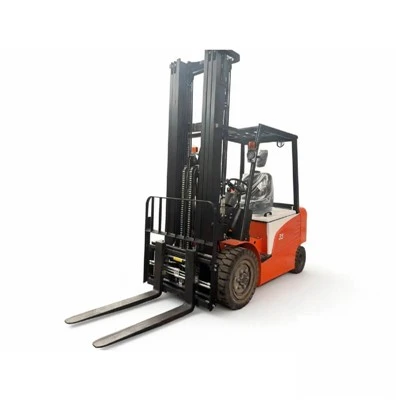
First off, let’s get the big myth out of the way right now. A lot of people assume every internal combustion engine uses spark plugs, but diesel is different—diesel runs on compression ignition, not a spark. Wait, hold on—does that mean diesel forklifts never have spark plugs? Well, not the ones that do the heavy lifting around warehouses or construction sites. The only time you’ll see spark plugs on a diesel engine is if it’s a cold-start assist plug—those tiny little things only kick in when it’s freezing outside, to heat up the combustion chamber so the diesel ignites. Most of the time, they’re barely doing anything, but if they go bad, you’re stuck with a lift that won’t turn over when the temp drops. That’s exactly what we had a customer deal with last winter—their forklift died mid-unloading at 2 a.m., and it was just a dead cold-start spark plug.
So let’s get real here: replacing spark plugs on a diesel forklift isn’t the same as changing them on a gas car. The process is smaller, way more niche, and only applies to those cold-start assist units. Still, if you’ve never done it before, it’s easy to mess up—break a plug, cross-thread, or mess up the wiring that controls the heat when you need it most. Let’s walk through the exact steps I tell all our customers, step by step, with stuff you can actually do, no fancy tools required.
First, safety. I can’t stress this enough, especially with a diesel lift. You’re working around fuel, hot parts, and heavy machinery. Always turn the key all the way off, disconnect the battery terminals (negative first, positive after—don’t skip this, I’ve seen someone spark a fuel line last year), and let the engine cool down for at least an hour. Those combustion chambers get crazy hot, and you don’t want to burn your hand before you even start. Also, make sure you’re working in a well-ventilated area—diesel fumes aren’t something to mess with, especially when you’re messing with wiring.
Next, grab the right parts and tools. This isn’t a “grab any spark plug from the auto store” job. Diesel cold-start plugs are way different—they’re built to handle way higher heat, and they’re specific to your forklift’s make and model (we always tell customers to cross-reference their serial number, not just the engine size, because even same-year lifts can have different parts). Tools you’ll need: a deep spark plug socket (not a regular one—cold-start plugs are recessed deep in the head), a ratchet, a spark plug gap gauge (wait, no—diesel cold-start plugs are pre-gapped, right? Don’t adjust the gap, that’s a waste), a torque wrench (critical—don’t over-tighten), and maybe a small extension if your engine’s tight. Also, grab a can of electric contact cleaner—you’ll need that for the wiring connectors.
Now, locate the plugs. They’re not the same place as gas engine spark plugs. On most diesel forklifts, cold-start spark plugs are screwed into the pre-chamber of each cylinder, right next to the fuel injector. You’ll see a little wire going to each one—usually black or red, easy to spot. Don’t mix them up, either—each plug is specific to its cylinder. If you’re not sure, take a quick photo with your phone before you start disconnecting anything. I can’t tell you how many times someone mixed up wires and ended up with a cylinder that wouldn’t fire.
Let’s get to removing the old plug. First, disconnect the wiring harness from the plug—pull the rubber boot off gently, don’t yank it hard, because the wire inside is thin and easy to break. Once the boot is off, take your deep spark plug socket, attach it to the ratchet, and twist counterclockwise. Go slow here—if it’s been in there for years, it might be a little rusted. If it’s stuck, don’t crank the ratchet so hard you break the socket; spray a little PB Blaster around the base and wait 10 minutes. That’s saved me more times than I can count. Once the old plug is out, check it for damage—if the insulator is cracked, or the electrode is worn down, that’s definitely why your cold start sucks. If it looks fine, maybe it’s just loose, but still replace it if it’s over 2 years old—we recommend swapping them every 2000 hours, same as most forklift wear parts.
Now, installing the new plug. Here’s where people mess up the most. First, inspect the new plug—make sure the rubber seal on the base is intact. If it’s missing, get a new plug, don’t try to reuse it. Thread it in by hand first—no tools. If you feel any resistance, stop, it’s cross-threaded. Cross-threading a plug means you’ll have to dig it out and fix the threads, which is a huge hassle and can damage the cylinder head. Once it’s hand-tight, grab your torque wrench—set it to the spec from your forklift manual (usually around 15 to 20 ft-lbs for diesel cold-start plugs, but double-check, because some models are different). Don’t over-tighten—you’ll crack the pre-chamber or break the plug. That’s a $500 mistake just for a $10 plug, so take it slow.
Now, the wiring part. Take your electric contact cleaner and spray inside the rubber boot and on the plug’s terminal. Wipe it with a clean rag, then push the boot back onto the plug until you hear a click. If it doesn’t click, it’s not connected right—loose connections mean no power when you need the heat for cold starts. Once all plugs are in and wired up, reconnect the battery (positive first, then negative), turn the key to “on” (don’t start it yet) and wait 10 seconds. You should hear a faint click from each plug—that’s them heating up. If you don’t hear anything, check your connections, because you missed a loose wire.
Wait, hold on—let’s talk about when you actually need to do this. I get it, if you live in a place where it never drops below 40 degrees, you might never need to touch these plugs. They only matter when temps are below freezing, because diesel is thicker when it’s cold, and it won’t ignite without that extra heat. If your forklift starts fine when it’s warm, but cranks forever and won’t start when it’s freezing? That’s the cold-start plug. If it starts fine all the time, leave the plugs alone. Also, if you’re having issues with rough idling when it’s cold, that’s another sign, but rough idling when warm is probably not related to the spark plugs.
Let me share a horror story to drive this home. Last year, a customer in Phoenix (yeah, Phoenix—they get cold nights sometimes, duh) called me panicking because their delivery forklift wouldn’t start at 5 a.m. when they had 10 pallets to ship. They tried cranking it 10 times, dead battery, nothing. They called a mechanic who said it was a dead battery, charged it, and it started—then a week later, same thing. Turned out, their cold-start plug was shorting out, so when it got cold, it drew too much power, drained the battery. They thought it was a battery issue, but it was just the spark plug. So yeah, don’t overlook these tiny parts.
Now, some common mistakes people make. First, using the wrong plug—auto store generic plugs are not the same as the forklift-specific ones. They’re built for different heat ranges, and if you use the wrong one, you’ll burn out the plug in a month. Second, over-tightening—like I said, that’s a recipe for disaster. Third, not disconnecting the battery—one spark from a wrench hitting the engine, and you’ve got a fuel fire. Fourth, mixing up wires—you’ll end up with a cylinder that doesn’t heat, so it won’t start cold.
Also, when should you call a pro? If you’re not comfortable working with wires or small engine parts, or if you’ve tried removing a stuck plug and it’s not coming out, don’t force it. We have a team that fixes this all day, every day, and we can come out or help you order the right parts if you’re not handy. Also, if you notice oil leaking around the plug, that’s a sign of a bad seal, which needs more work, so call a mechanic.
Now, let’s wrap this up. The big takeaway: diesel forklifts don’t have the spark plugs you’re thinking of—those are cold-start assist units, only for when it’s freezing out. Replacing them is a straightforward job if you follow the steps: safety first, use the right parts, go slow when tightening, and don’t mess with the wiring. If you’ve got questions, or you need parts for your diesel forklift, hit us up to talk through your needs. We help folks like you get their lifts back up and running without the headache of trying to figure it all out alone.

Oh, one last thing—pro tip: keep a spare set of cold-start spark plugs in your forklift’s toolbox. They’re small, cheap, and you’ll never regret having one when 2 a.m. rolls around and your lift decides it doesn’t want to start. Trust me, I’ve been there.
Heavy Duty Forklift References:
- Forklift Operation & Maintenance Manual, National Industrial Truck Association, 2021
- Diesel Engine Cold-Start System Specifications, Cummins Inc., 2022
- Recommended Maintenance Intervals for Material Handling Equipment, Material Handling Industry Association, 2020
Propolift Machinery Co., Ltd.
Propolift Machinery Co., Ltd. is one of the most professional diesel forklift manufacturers and suppliers in China, featured by quality products and good price. Please rest assured to buy durable diesel forklift made in China here from our factory. Welcome to contact us for custom service and OEM service.
Address: No.271, Hardware Industrial Park, Quanzhou, China
E-mail: info@propolift.com
WebSite: https://www.propolift.com/
