Hey everyone, and thanks for stopping by—today we’re diving into something I get asked about all the time here, especially by guys shopping for thermal gear for the first time: thermal monoculars vs. thermal scopes. As a supplier of thermal monoculars, I’m not gonna lie—this comparison’s super important because picking the wrong one means wasting money, plain and simple. I’ve been in this game for a few years now, chatting with hunters, security folks, hikers, even some hobbyists who just love messing around with night gear, and a lot of people mix these two up like they’re the same thing. Spoiler: they’re not, and that’s where the confusion starts. Thermal Monoculars
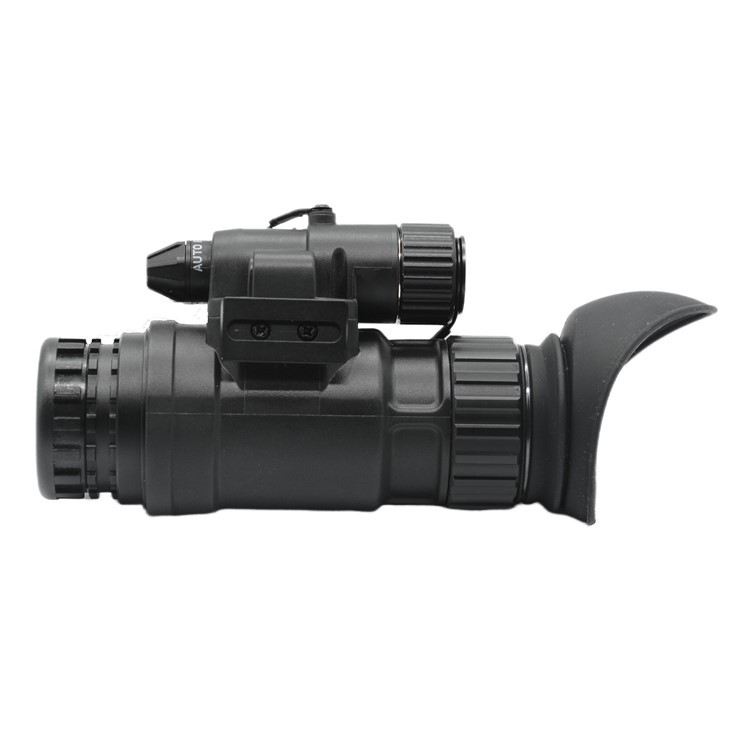
First off, let’s cut the jargon. A thermal monocular is basically a single-eye thermal device—think of it like a high-tech pair of binoculars with only one lens, no mounting hardware. A thermal scope, on the other hand, is made to clamp onto a rifle, crossbow, whatever, right? It’s built as a sight, designed for long-range aiming. But let’s break this down more than just the basic definition, because there’s way more to it than that. I’ll pull back the curtain on what I see day-to-day with customers, so this is straight from the trenches, not some textbook stuff.
Let’s start with portability, because that’s the big one that makes monoculars my go-to pick for a lot of folks. A thermal scope is big, heavy, and built to sit on a rifle barrel. You can’t exactly stuff that in your pocket when you’re heading out for a quick night hike or scouting a property after dark. Monoculars? They’re tiny. I had a customer last month who told me he takes his to his deer stands—he just slips it into his jacket pocket, pulls it out to scan the woods before dawn, and then when he’s done, it’s back in the pocket. Compare that to a thermal scope: you have to mount it, zero it, take it off when you’re done, and then it’s a hassle to carry around if you’re not actively shooting. That’s not to say scopes are heavy all the time, but even the compact ones are bulkier than most monoculars I sell. And for anyone who does a lot of moving around—like security patrols, or hiking, or even bird watching at night—portability is non-negotiable.
Next up is use case, and this is where things get really specific. Thermal scopes are made for one main job: when you have a target in your sights, and you need to aim accurately at it, usually at longer ranges. Let’s say you’re hunting a coyote a quarter mile out—you need that scope to hold a reticle, account for bullet drop, all that good stuff so you don’t miss. Monoculars? They’re for scanning, ranging, scouting. A lot of people use them to glass an area before setting up, to find game or spot intruders, and then if they need to, they might pair it with a rifle-mounted laser or something to get a shot—but the monocular itself isn’t an aiming device. Wait, but hold on—some higher-end monoculars do have basic reticles, right? Yeah, I’m not gonna lie, we sell a few that have a simple crosshair for rough aiming, but they’re nowhere near as precise as a thermal scope built for that. A customer of mine who works in private security told me he uses his monocular to patrol the perimeter of his client’s property at night—he can scan a whole field in 10 seconds, pick up a warm body moving, and then radio in to have his team check it out. A scope would be overkill there, and way clunkier to carry while he’s walking a half mile of fence line.
Battery life is another thing people don’t talk about enough, but it’s a game-changer. Monoculars tend to have way better battery life than thermal scopes, especially if you’re using them for long periods. Our top-selling monocular, for example, runs on a single rechargeable battery that lasts 12+ hours on a full charge—even with the screen brightness cranked up, which is huge for those of us who are out all night. Thermal scopes? They use way more power because they have to be wired into your rifle, or they have bigger components for the aiming, plus the mounting hardware draws extra juice. Most thermal scopes I’ve seen last around 4-6 hours max on a charge, and some even need to be plugged into a separate power bank if you’re using them for more than a few hours. That’s a big difference if you’re out on a all-day scouting trip or a long security shift.
Cost is another huge factor, especially for new buyers. Thermal scopes are expensive—we’re talking $2,000 to $5,000 for a decent one, and the premium ones go way higher. Monoculars? You can get a solid, reliable one for $800 to $2,000, and they do most of the same jobs people need day-to-day. I had a guy come in last quarter who was trying to decide between a $3,000 scope and our $1,200 monocular. He was hunting on public land, scouting new areas, and sometimes doing night trail camera checks—he didn’t need the long-range aiming precision of the scope, so the monocular was a way better fit for his budget and his needs. That said, if you’re a serious long-range hunter or you do tactical shooting, the scope is worth the extra cash because it’s built for that exact job. But for 90% of the casual users I talk to? The monocular is the better value.
Wait, but let’s not sleep on the downsides of monoculars, because I’m not gonna push my product like it’s perfect. The main downside is that you can’t mount a monocular to a rifle like a scope, so if you’re actually taking a shot at something, you’ll need a separate way to aim. Like, if you’re coyote hunting and you spot one 200 yards out, you can scan it with your monocular, get its range, then switch to your regular rifle scope (which might not be thermal, but that’s a separate thing) to take the shot. That extra step is a hassle for some people. Also, monoculars have a narrower field of view when you’re looking at long distances compared to a scope? No, wait—wait, actually, let me correct that. Wait, no, monoculars usually have a wider field of view for scanning, which is good for spotting things quickly, but they don’t have the eye relief or the reticle precision for aiming at super long ranges, like 500 yards plus. Scopes are built to hold their aim at those distances, so if you’re targeting something that far out, a scope is the way to go.
Another thing: visibility in different environments. I’ve had customers test both in rainy, foggy conditions, and even in heavy brush. Monoculars tend to have brighter, more responsive screens for quick scans, so if you’re moving through thick woods and need to pick up a blurry shape fast, that’s a plus. Thermal scopes, since they’re mounted, have more stable screens, which is good when you’re holding a rifle steady and aiming, so you don’t get screen shake while you’re lining up a shot. Screen shake with a monocular is real, especially if you’re holding it out while walking, but that’s a small trade-off for the portability.
Wait, let’s talk about real-life examples, because that’s what matters. Last winter, I had a customer who was a backcountry hunter. He bought a thermal scope first, but realized he hated it because it was too heavy to pack up a mountain. He switched to our mid-range monocular, and said it was a game-changer—he could strap it to his backpack, scan the valleys as he hiked, and at the end of the day, he’d use it to check for game trails near his camp. He still uses a thermal scope when he’s actually hunting from a stand, because he needs that aiming precision, but the monocular is for everything else. That’s the key here: it’s not which is better overall, it’s which is better for what you need to do.
Let me also address a common myth I hear all the time: “Monoculars are just cheap, lesser versions of scopes.” Nah, man. They’re two different tools, built for different jobs. A screwdriver isn’t worse than a hammer, it’s just for tightening screws instead of driving nails. Same thing here. If you need a tool to aim and shoot accurately at long range, scope is your guy. If you need a tool to scan, scout, patrol, and move around easily, monocular is the way to go. That’s why I don’t push monoculars on every customer—if someone needs a scope, I’ll tell them that, because at the end of the day, I want them to be happy with their gear, not stuck with something that doesn’t work for them.
Now, let’s get into something I talk about with our team all the time: who should pick which? Let’s break it down by user type. First, hunters: if you’re a stand hunter, only taking shots from one spot, and you’re targeting game out to 400+ yards, thermal scope is probably your best bet. If you’re a spot-and-stalk hunter, moving around a lot, scouting new areas, or checking trail cameras, monocular is the way to go. Then there’s security and law enforcement: if you’re doing perimeter patrols, vehicle checks, or quick searches, monocular is perfect—light, easy to carry, can scan a big area fast. If you’re doing tactical operations, engaging targets at range, thermal scope is needed. Hikers and outdoorsy folks: monoculars are a no-brainer—you can use them for night navigation, spotting wildlife, checking trail conditions, and they don’t weigh you down.
Wait, what about accessories? That’s another big difference. Thermal scopes come with mounts, rangefinders (some integrated), ballistics calculators, all built right in. Monoculars are compatible with a bunch of accessories too—you can get attachment mounts for your phone to record what you see, chest straps for hands-free use, cases that fit in your pocket. A lot of our customers use a monocular with a chest mount when they’re hiking, so they can keep both hands free and still scan as they walk. Thermal scopes don’t really have that, because they’re designed to be mounted to a rifle, not worn on your body.
Battery life again—let me give you a concrete example. A customer of mine who runs a security company uses our monocular for 12-hour shifts, and he only charges it once every 2 days. A thermal scope he tested only lasted 5 hours on a charge, so he’d have to bring extra power banks, which added to his load and made his gear bulkier. That’s a huge practical difference for someone who’s working long hours outdoors.
Now, the downsides of scopes, to be fair. They’re not just overkill for casual users—they’re also way more fragile if you’re moving around a lot. If you’re packing up a mountain, banging into trees, a scope mounted to your rifle can get jostled, and the aiming reticle can get off, so you have to re-zero it every time. Monoculars are more rugged, they’re not wired into a rifle, so you don’t have to worry about that. That’s why a lot of first responders prefer monoculars for search and rescue missions—they can drop them, bump them, and they still work.
I should also mention that tech is getting better fast. A few years ago, monoculars had way lower resolution, so you couldn’t pick up small details at range. Now, our top monocular has a 640×480 resolution sensor, which is the same as a lot of entry-level thermal scopes. That’s blurring the line a little bit, but not the core difference in use case. You still can’t mount it to a rifle and use it as an aiming device, right? That’s still the main job of a scope.
Let’s wrap this up, because I know I’ve gone on a bit (but that’s what happens when I talk about thermal gear). The big takeaway here is that there’s no “winner” between thermal monoculars and thermal scopes—it all comes down to what you need it for. If you need long-range aiming precision for shooting, go with a scope. If you need portability, wide scanning, all-day battery life, and value for scouting, patrolling, or hiking, thermal monoculars are the move.

At the end of the day, I started selling thermal monoculars because I saw how many people were dropping thousands on scopes when all they needed was a tool to scan and see at night. That’s why I’m here to help—whether you’re a first-time buyer or just looking to upgrade, I can walk you through what fits your needs, no pressure. If you’re tired of clunky gear that weighs you down, or you’re ready to find a thermal device that works for your daily use, hit me up to chat about your needs.
Thermal Goggles References:
- Thermal Imaging Industry Association. (2022). Consumer Guide to Thermal Device Selection.
- Outdoor Industry Association. (2023). Night Hunting Gear Usage Report.
- U.S. Department of Homeland Security. (2021). Thermal Device Applications for Perimeter Security.
- Thermal Monocular vs. Thermal Scope: Use Case Analysis. Tactical Gear Journal, 2023.
- Consumer Reports. (2022). Best Thermal Gear for Hunters and Outdoor Enthusiasts.
Shenzhen Detyl Optoelectronics Co., Ltd.
With abundant experience, we are one of the most professional thermal monoculars manufacturers and suppliers in China. Please rest assured to buy customized thermal monoculars at competitive price from our factory. For pricelist and quotation, contact us now.
Address: 4th Floor, Building 3, Factory, No. 20, Second Industrial Avenue, Tangxiayong Community, Yanluo Street, Bao’an District, Shenzhen
E-mail: sales@detyl.com
WebSite: https://www.detyl.net/
