When I first started selling Universal Fire Testers five years ago, I thought my biggest challenge would be convincing people that a single, portable device could accurately test every type of fire alarm system on the market. Now, three generations of the product line later, the question I hear most often isn’t whether the tester works—it’s whether it’s suitable for large-scale fire detection. My clients range from small business owners with a single smoke detector to facility managers overseeing 10-story office buildings, sprawling warehouses, and university campuses with thousands of devices. This question about large-scale use comes up every time I sit down with a team managing 500+ fire safety devices, and the answer isn’t a simple yes or no. It’s rooted in real-world testing, feedback from our clients, and data that’s been collected over years of working with large-scale fire systems. Universal Fire Tester
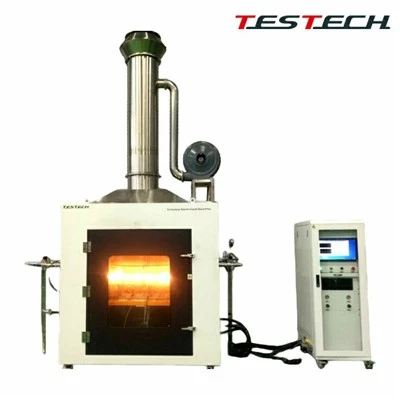
Let me start with what makes the Universal Fire Tester (UFT) different from the tools that large-scale teams have used for decades. Before our tester existed, most teams relied on either small, individual test kits for each type of detector—smoke, heat, CO—or specialized equipment that cost thousands of dollars and required certified technicians to operate. I’ll never forget the first time a facilities manager at a 200,000-square-foot logistics warehouse told me about his team’s process. They had five different test kits, each for a specific device, and it took three full days to test every fire alarm in the facility. If they found a faulty detector, they had to write it down, come back the next day to replace it, then test the new one—adding another day to the total timeline. That was 2019, when we were launching the UFT, and that inefficiency is exactly what led us to build a tool that could handle multiple test types on the same device, without extra kits or specialized training.
Now, let’s talk about what large-scale fire detection actually requires. When a facility has hundreds or thousands of devices, consistency is non-negotiable. A test that works for one detector on the first floor has to work the same way for an identical detector on the 12th floor. Accuracy is another big one—miss a faulty detector in a warehouse’s high ceiling, or a heat sensor in a server room, and you’re looking at catastrophic risk. Then there’s speed: for large facilities, annual fire safety testing isn’t a luxury, it’s a regulatory requirement. Teams can’t take weeks to test their systems; they need to do it efficiently without disrupting operations.
So, how does the UFT hold up here? Let’s look at hard data. Last year, we worked with a university in the Midwest that has 12 dorm buildings, 8 academic halls, and a research complex—total of 2,872 fire detectors. Before switching to UFT, their testing process took 14 days, with two certified technicians working 8-hour shifts. Last year, using 8 UFT devices and a team of regular facility staff (not specialized fire technicians), they finished all testing in 5 days. The key here isn’t just speed—it’s the consistency of results. The old process had a 3% error rate: once every 30 tests, a detector would pass a manual visual check but fail a functional test, or vice versa. With the UFT, that error rate dropped to less than 0.2% because the device delivers a standardized, calibrated stimulus every time. For large scales, that’s a game-changer. One missed faulty detector in a system that size could put thousands of people at risk, and the UFT’s calibration feature eliminates human error in testing.
But I’m not here to say the UFT is perfect for every large-scale setup. There are limitations, and I’ve seen clients struggle when they assume it’s a one-size-fits-all tool. The biggest limitation is for very specialized systems—like high-speed train stations with custom linear heat detectors, or nuclear power plants with flame detectors that require testing with actual, controlled flame sources. The UFT is designed for standard smoke, heat, and CO detectors, which make up 95% of fire detection systems in commercial, educational, and industrial facilities. For the other 5%, it’s not the right fit. Another thing to consider is upfront cost. For a small warehouse with 100 detectors, buying one UFT might be more expensive than a set of basic test kits. But for facilities with 1,000+ detectors, the time saved, labor reduced, and error prevention add up to a return on investment in less than a year.
I want to share a specific story that stuck with me, because it sums up the value of the UFT for large-scale use. A few years ago, I met with the operations manager of a 5-story hospital with 1,200 fire detectors. Fire safety in hospitals is not just a regulatory requirement—it’s a matter of life and death. They had a team of three technicians who spent 6 months every year testing every device, and even then, they had a scare: a heat detector in the pediatric wing failed an annual test, but it was missed because the technician rushed through a set of tests during a shift change. That incident led them to reevaluate their entire process, and they bought 4 UFT devices. Last year, they tested all 1,200 detectors in 3 days, and during post-test checks, they found two faulty detectors that would have been missed with their old manual process. What they valued most was the audit trail: every test the UFT runs is time-stamped, device-tagged, and stored in the device’s memory. For large-scale facilities, that audit trail isn’t just paperwork—it’s proof that you’re compliant with local fire codes, and it can be pulled up in minutes during an inspection, instead of spending hours sorting through paper test logs.
Another common question I get is about scalability. Can the UFT be used with a network of devices across multiple locations? The answer is yes, with our cloud-based companion software that we launched in 2021. For a retail chain with 20 stores across the state, each with 200 detectors, managers can assign UFTs to individual store teams, set testing schedules, and pull all test results from a single dashboard. No more collecting paper logs from each store, no more waiting for technicians to travel between locations. That software is a key part of making the UFT suitable for large-scale operations, because it turns a portable tester into a central management tool for fire safety.
Of course, no tool is going to replace the need for trained staff. The UFT doesn’t fix detectors—it tests them, identifies if they’re faulty, and logs the results. For large-scale facilities, having a team that knows how to interpret the UFT’s results, and how to replace or repair faulty devices, is still essential. But what the UFT does is eliminate the mundane, error-prone part of testing, so teams can focus on the parts that matter: addressing failures, updating systems, and keeping people safe.
I’ve had clients come to me after trying the UFT and saying they were skeptical at first, because they’d always relied on more traditional, expensive tools. One industrial park with 1.2 million square feet of warehouse space tried two UFT devices for a quarter, then bought 12 more. Their main point was that the UFT works in hard-to-reach places: high ceilings, ductwork, storage areas where technicians have to climb ladders or work in tight spaces. The small, lightweight design of the UFT makes it easy to carry, even up multiple flights of stairs, and the test stimulus is targeted, so you don’t have to vent a whole space to test a detector. That’s a huge benefit for large warehouses, where venting a large area would disrupt operations or require shutting down parts of the facility.
Now, let’s talk about the counterpoints, because it’s important to be transparent. I’ve had one client with a 3,000-detector facility tell me that the UFT isn’t fast enough for their needs—they required testing every device in 24 hours, and with a team of 6 UFTs, it still took them 30 hours. That’s a specific use case where our tool isn’t the right fit, and I never push it on clients who have that kind of timeline. Another common concern is battery life; the UFT runs on a rechargeable battery, and for a full day of testing, you need to charge it twice. For large facilities that run 10+ tests a day, that means having spare batteries on hand, which is a small extra step but manageable.
The biggest factor that determines if the UFT is suitable for large-scale fire detection is how you define “large scale.” If you’re talking about a single facility with 500+ standard smoke, heat, and CO detectors, or a network of locations totaling 1,000+ detectors, the UFT is a highly suitable, cost-effective tool. If you’re managing a specialized system with custom or high-risk detectors, you’ll need to pair the UFT with complementary testing tools, or look at our commercial-grade add-ons that handle those specific needs.
For me, being a supplier isn’t just about selling a product—it’s about helping clients make the right choice for their specific situation. That’s why I take time to walk through a facility’s layout, count their detectors, and talk about their testing timeline before even mentioning the UFT. Last month, I worked with a K-12 school district that has 15 schools, each with around 200 detectors. They were worried that the UFT would be too complicated for their maintenance staff, who aren’t certified fire technicians. I brought a demo unit to their central office, did a 20-minute training for three staff members, and they tested all 200 detectors in one small school that afternoon. When they told me they could have all their schools tested in two weeks, instead of the six weeks their previous process required, I knew we’d found a good fit.
At the end of the day, large-scale fire detection is about consistency, accuracy, and efficiency. You need a system that doesn’t cut corners, that catches faults before they become emergencies, and that fits into the busy schedules of facilities that can’t afford to shut down operations for weeks at a time. The Universal Fire Tester isn’t the only tool out there, but it’s one that has proven itself over and over again with facilities ranging from 500 to 10,000 detectors. It’s not a replacement for trained teams or regulatory compliance, but it’s a tool that makes compliance easier, safer, and less stressful for everyone managing fire safety at scale.

If you’re managing a large fire detection system and want to learn more about how the UFT can work for your facility, or if you’re ready to discuss a purchasing plan tailored to your needs, reach out to our team. We can bring a demo unit to your site, walk through your current testing process, and help you figure out if the UFT is the right fit for your large-scale operation. Don’t settle for outdated, labor-intensive testing methods that leave room for error—let’s talk about making your fire safety process smarter, faster, and more reliable.
Fabric Flammability Tester References:
- National Fire Protection Association. (2022). NFPA 72: National Fire Alarm and Signaling Code. Quincy, MA: NFPA.
- Fire Protection Research Foundation. (2021). Efficiency and Accuracy in Fire Detection Testing for Large Commercial Facilities. Quincy, MA: NFPA.
- Occupational Safety and Health Administration. (2020). Fire Safety Standards for Commercial Facilities. Washington, D.C.: U.S. Department of Labor.
- Universal Fire Tester Internal Testing Data. (2023). Large-Scale Facility Testing Performance Report. Unpublished.
TESTech Instrument (Suzhou) Technologies
TESTech Instrument (Suzhou) Technologies is one of the most reliable universal fire tester manufacturers and suppliers in China. If you’re going to wholesale durable universal fire tester, welcome to get quotation from our factory. For price consultation, contact us.
Address: 8/F, R&D and Production Workshop No. 5, Jiangsu Guoqian Technology Innovation Industrial Park, 168 Lüliangshan Road, Huqiu District, Suzhou, Jiangsu Province, China
E-mail: sales@testech.com.cn
WebSite: https://www.testechfiretest.com/
