Hey guys, if you’ve ever worked in the pharma industry – whether you’re a lab tech, production manager, or just someone who’s ever filled a prescription – you know how non-negotiable cleanliness, durability, and compliance are. You can’t cut corners on materials that touch drugs, ingredients, or even the equipment that handles sensitive products. And lately, I’ve been getting so many questions from pharma clients (and even a few small biotech startups testing their first batch of a new supplement) asking: “Wait, can stainless steel sheets actually work for us? I always thought that’s just for kitchen stuff.” Stainless Steel Sheet
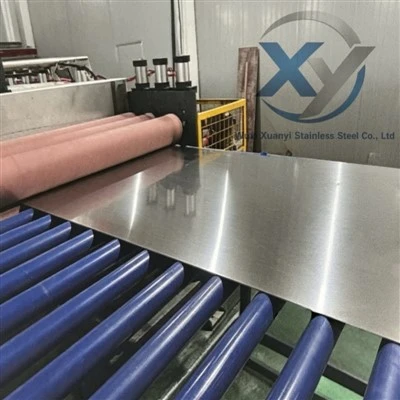
Full transparency: I’m a stainless steel sheet supplier, so I’m biased. But I’m also the guy who answers 100+ product questions a week, and I can tell you this isn’t a “yes/no” answer. It’s a “hell yes – but only if you pick the right grade, and here’s why that matters for your pharma operation.” Let’s break this down like I’m talking to you over a coffee (since I hate super formal jargon that no one actually needs).
First, let’s get the big myth out of the way: stainless steel isn’t just for your grandma’s mixing bowl. It’s the unsung hero of modern manufacturing, and pharma is one of its biggest, most regulated users. But let’s talk about what makes stainless steel different from, say, aluminum or plastic – because that’s where the value (and the confusion) lives.
You see, stainless steel gets its name from that thin, invisible chromium oxide layer that forms when it reacts with oxygen. That’s what prevents rust, and it’s non-negotiable for pharma work. If you use a material that rusts in a clean room? That’s a huge contamination risk – not just for the product, but for compliance audits, which pharma teams live in fear of. The FDA, USP (United States Pharmacopeia), even ISO have strict rules for materials that come into contact with APIs (active pharmaceutical ingredients) or excipients (the other stuff in pills). So this isn’t just “it doesn’t look rusty” – it’s a legal and safety requirement.
Now, grade matters. I can’t stress that enough. Not all stainless steel is created equal, and the grade you pick for a kitchen table isn’t going to cut it for a pharma reactor. Let’s go over the two most common ones we supply for this space, because 9 times out of 10, those are the only two you’ll need.
First, 316L stainless steel. This is the workhorse. The “L” stands for low carbon, which is a big deal. Why? Regular 316 has higher carbon, which can leave tiny corroded spots (called sensitization) when it’s welded. Welding is basically non-negotiable for making pipes, tanks, and custom parts, right? So low carbon means no extra corrosion after welding. But wait, what makes it better than 304? Oh right – molybdenum. That’s the secret ingredient. Molybdenum makes 316L way more resistant to chlorides. If you work in pharma, you deal with tons of chloride-based solutions – saline, disinfectants you use to clean equipment, even some drug formulations. Chlorides eat through regular steel, but 316L holds up. No pitting, no crevice corrosion, no little spots where bacteria can hide. That’s huge for clean-in-place (CIP) processes, which is how pharma teams sanitize their equipment between batches. CIP uses hot, caustic solutions, and if your material can’t handle that? You’re stuck taking parts apart to clean manually, which is a nightmare for efficiency and compliance.
The second one is 304, but only for specific applications. I tell pharma clients all the time: 304 is fine for non-contact parts – like shelving in a clean room, or the outer casing of a mixing unit – but never for anything that touches the product directly. It’s cheaper, but it’s not chloride-resistant, and it can leach tiny amounts of nickel into formulations over time. Nickel is a big no-no for some drugs, especially injectables or oral meds for sensitive groups. So save 304 for the stuff that doesn’t touch the product, and spring for 316L for everything process-related.
Now, let’s get into the actual uses in pharma, because that’s where most people don’t realize how ubiquitous stainless steel sheets are. I’m not just talking about big reactors – though we supply tons of 316L sheets for those. We also do custom cut sheets for:
- Pharma tanks and storage vessels: These hold APIs, finished drug batches, and even raw materials. Stainless steel doesn’t react with the ingredients, so no cross-contamination between batches. If you switch from a tank for antibiotic A to antibiotic B, you can just CIP it and go – whereas a plastic tank might hold residue no matter how hard you scrub.
- Pipes and tubing: Yep, made from stainless steel sheets rolled and welded. Critical for transferring sensitive liquids without adding any impurities. Even tiny scratches in pipes can catch product, so our sheets come with a polished finish (either #4 polish for general use, or electro-polished for super high-cleanliness applications like injectables) to prevent that.
- Filling equipment parts: The small, precision parts that go into pill fillers, vial fillers, or syringes. These need to be smooth, non-porous, and corrosion-resistant – which is exactly what 316L sheets give you.
- Clean room fixtures: Think workbenches, shelving, glove boxes. These are usually 304, but sometimes 316L if they’re near high-sensitivity products.
Wait, but let’s address the elephant in the room: why not plastic? Plastic is cheaper, right? Well, short-term, maybe. But over time, plastic can leach chemicals, scratch easily (holding bacteria), and break down with repeated CIP cycles. Plus, for products that need to be sterile (like injectables), plastic can absorb sterilization agents (like ethylene oxide) – which means you have to wait longer for the part to off-gas, or risk contamination. Stainless steel holds up to autoclaving (high heat steam sterilization) over and over, no issues. I had a client a few months back who switched from plastic storage to our 316L sheets and cut their contamination incidents by 90%. They were tired of re-batching products because of residue in plastic tanks, and the audit points from the FDA were killing them. Now their clean-in-place time is way shorter, too.
Another big point: compliance. Pharma is one of the most regulated industries on the planet. Every material that touches a product has to have traceability – you need to know exactly where the metal came from, its chemical composition, that it meets USP Class VI standards. USP Class VI is a big deal – that means the material passed tests for toxicity, no leaching, and biocompatibility. All the 316L and 304 sheets we supply are USP Class VI certified, and we provide full documentation for every order. That’s non-negotiable. If a supplier can’t give you that paperwork? Walk away. You don’t want to get a 483 form (that’s the FDA’s warning letter, basically) because your material didn’t meet standards.
But wait, is there a time stainless steel isn’t the right call? Let’s be real – no material is perfect. If you’re making a disposable part for a single-use bioreactor (like a bag for cell culture), plastic or single-use film is way cheaper and easier. But for reusable, long-term process equipment? Stainless steel is the only way to go. It’s more durable – a 316L sheet tank can last 20+ years with proper care, whereas a plastic tank might need replacing every 3-5 years. Over time, it’s actually more cost-effective, even if the upfront cost is higher.
I also hear people say “stainless steel is hard to clean.” No – if it’s the right grade and has a smooth finish, it’s way easier to clean than plastic. Plastic has microscopic scratches that bacteria get stuck in; electro-polished stainless steel has a super smooth surface where nothing adheres. We work with a lot of pharma teams that use automated cleaning systems, and those systems work way better on stainless steel than any other material.
So let’s wrap this up, because I know you’re tired of reading – here’s the takeaway: Yes, stainless steel sheets are absolutely essential for the pharmaceutical industry – but only if you pick the right grade (316L for product contact, 304 for non-contact), and only if you get certified, traceable material that meets USP and FDA standards. It’s not just a “material” – it’s a key part of keeping drugs safe, avoiding compliance headaches, and making your production process efficient.
If you’re a pharma team wondering what grade you need, or how to spec custom stainless steel sheets for your next project, hit me up. No sales pitch, no pressure – just straight answers. I’ve been working with pharma clients for years, and I know how stressful it is to get this right. Shoot me a message and we can walk through your needs.
Carbon Steel Bar References:
- U.S. Food and Drug Administration. (2023). Guidance for Industry: Materials Used in Pharmaceutical Product Contact.
- United States Pharmacopeial Convention. (2022). USP <23> Biological Reactivity Tests, In Vivo.
- International Organization for Standardization. (2021). ISO 20815: Petroleum, petrochemical and natural gas industries – Materials for equipment and pipelines subject to sour service.
- European Medicines Agency. (2022). Guideline on Good Manufacturing Practice (GMP) for Medicinal Products for Human and Veterinary Use.
- Stainless Steel World. (2023). “Stainless Steel in Pharmaceutical Manufacturing: Key Grades and Applications.”
Wuxi Xuanyi Stainless Steel Co., Ltd.
Wuxi Xuanyi Stainless Steel Co., Ltd. is one of the most professional stainless steel sheet manufacturers and suppliers in China. With abundant experience, we warmly welcome you to wholesale bulk durable stainless steel sheet made in China here from our factory. If you have any enquiry about cooperation, please feel free to email us.
Address: Room 1207, Building 11, Shengang Metropolis Plaza, No. 299 Fangcheng Avenue, Xinwu District, Wuxi City,China.
E-mail: jscherryxy@163.com
WebSite: https://www.xuanyisteel.com/
