When it comes to setting up a brewery, one of the most critical considerations is the space required for scale beer equipment. As a seasoned scale beer equipment supplier, I’ve encountered numerous clients grappling with this very question. In this blog post, I’ll delve into the factors influencing the space needs of scale beer equipment and provide insights to help you plan your brewery layout effectively. Scale Beer Equipment
Understanding Scale Beer Equipment
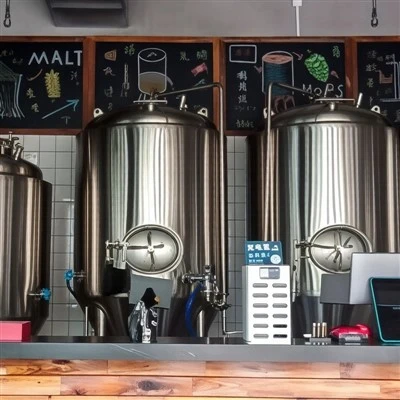
Before we dive into the space requirements, it’s essential to understand what scale beer equipment encompasses. Scale beer equipment typically includes a range of components such as mash tuns, brew kettles, fermenters, bright tanks, and cooling systems. These pieces of equipment vary in size and configuration depending on the brewery’s production capacity, brewing process, and equipment type.
The production capacity of a brewery is often measured in barrels (bbl) or hectoliters (hL). A barrel is equivalent to 31 gallons or approximately 117 liters, while a hectoliter is equal to 100 liters. Small-scale breweries, often referred to as microbreweries, typically have a production capacity of up to 15,000 barrels per year, while large-scale breweries can produce hundreds of thousands or even millions of barrels annually.
Factors Influencing Space Requirements
Several factors influence the space needed for scale beer equipment. Let’s explore these factors in detail:
Production Capacity
The production capacity of your brewery is perhaps the most significant factor determining the space requirements for your beer equipment. Larger production capacities generally require larger equipment, which in turn requires more space. For example, a microbrewery with a production capacity of 1,000 barrels per year may require a brewing system with a 3 – 5 barrel batch size, while a large-scale brewery producing 100,000 barrels per year may need a system with a batch size of 30 barrels or more.
As the batch size increases, the size of the mash tun, brew kettle, fermenters, and other equipment also increases proportionally. Additionally, larger breweries may require multiple fermenters and bright tanks to accommodate the increased production volume, further increasing the space requirements.
Equipment Configuration
The configuration of your beer equipment can also have a significant impact on the space needed. Some equipment is designed to be compact and modular, allowing for efficient use of space. For example, some brewing systems feature integrated mash tuns and brew kettles, which can save space compared to separate units.
On the other hand, some equipment may require additional space for maintenance, cleaning, and access. For example, fermenters and bright tanks often need to be accessible from all sides for cleaning and sampling, which may require extra space around the equipment.
Brewing Process
The brewing process you choose can also influence the space requirements for your equipment. Different brewing processes may require different types of equipment or additional steps, which can increase the overall space needed.
For example, a traditional German-style brewing process may require a decoction mash, which involves boiling a portion of the mash multiple times to achieve a specific flavor profile. This process typically requires additional equipment, such as a decoction kettle, and may require more space than a single – infusion mash process.
Similarly, some breweries may choose to use a secondary fermentation process, which involves transferring the beer to a separate vessel for further conditioning. This process requires additional fermenters or conditioning tanks, which can increase the space requirements.
Storage and Packaging
In addition to the brewing equipment, you’ll also need space for storing raw materials, finished beer, and packaging materials. Raw materials such as malt, hops, and yeast typically require dry storage areas, while finished beer may need to be stored in a cool environment to maintain its quality.
Packaging equipment, such as bottling or canning lines, also requires space. These lines can be quite large and may need to be set up in a dedicated area of the brewery. Additionally, you’ll need space for labeled bottles or cans, as well as space for loading and unloading trucks.
Utility and Support Systems
Beer equipment also requires various utility and support systems, such as water supply, drainage, electrical systems, and cooling systems. These systems need to be properly installed and maintained, which requires additional space.
For example, a cooling system may require a large chiller unit and a network of pipes to circulate the cooling fluid. The chiller unit needs to be placed in a well – ventilated area, and the pipes need to be routed through the brewery, which can take up additional space.
Calculating Space Requirements
Calculating the exact space requirements for your scale beer equipment can be a complex task, but here’s a general guideline to help you get started:
- Determine your production capacity: Based on your market research and business plan, decide on the production capacity of your brewery. This will help you determine the size of your brewing system and other equipment.
- Select your equipment: Choose the specific pieces of equipment you’ll need based on your production capacity and brewing process. Research different manufacturers and models to find equipment that meets your needs and fits within your budget.
- Measure the equipment footprint: Once you’ve selected your equipment, obtain the dimensions of each piece from the manufacturer. Measure the length, width, and height of the equipment, and calculate the total floor area required.
- Add space for clearance and access: In addition to the equipment footprint, you’ll need to add space for clearance around the equipment for maintenance, cleaning, and access. A general rule of thumb is to allow at least 3 – 5 feet of clearance around each piece of equipment.
- Factor in storage and packaging space: Estimate the amount of space you’ll need for storing raw materials, finished beer, and packaging materials. Consider the size of your storage containers and the volume of materials you’ll need to store.
- Include space for utility and support systems: Don’t forget to account for the space needed for utility and support systems such as water supply, drainage, electrical systems, and cooling systems.
Examples of Space Requirements
To give you a better idea of the space requirements for different scales of beer equipment, here are some examples:
Microbrewery (Up to 1,000 Barrels per Year)
- Brewing System: A 3 – 5 barrel batch size brewing system typically requires a floor area of approximately 100 – 200 square feet.
- Fermenters and Bright Tanks: For a microbrewery producing up to 1,000 barrels per year, you may need 3 – 5 fermenters and 2 – 3 bright tanks. These tanks can take up an additional 200 – 300 square feet of floor space.
- Storage and Packaging: You’ll need approximately 100 – 200 square feet of space for storing raw materials, finished beer, and packaging materials.
- Total Space: In total, a microbrewery producing up to 1,000 barrels per year may require a facility with a floor area of 500 – 800 square feet.
Regional Brewery (1,000 – 15,000 Barrels per Year)
- Brewing System: A 10 – 30 barrel batch size brewing system typically requires a floor area of approximately 300 – 600 square feet.
- Fermenters and Bright Tanks: For a regional brewery producing between 1,000 and 15,000 barrels per year, you may need 10 – 20 fermenters and 5 – 10 bright tanks. These tanks can take up an additional 800 – 1500 square feet of floor space.
- Storage and Packaging: You’ll need approximately 300 – 500 square feet of space for storing raw materials, finished beer, and packaging materials.
- Total Space: In total, a regional brewery producing between 1,000 and 15,000 barrels per year may require a facility with a floor area of 1500 – 2600 square feet.
Large – Scale Brewery (Over 15,000 Barrels per Year)
- Brewing System: A brewing system with a batch size of 30 barrels or more can require a floor area of 800 – 1500 square feet or more, depending on the complexity of the system.
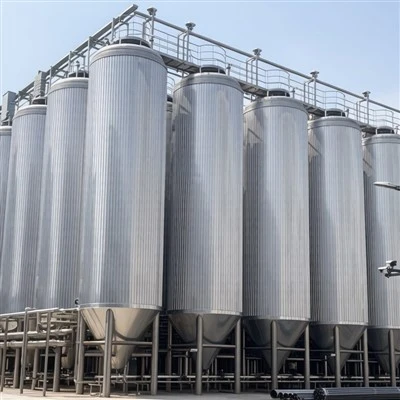
- Fermenters and Bright Tanks: Large – scale breweries may have dozens or even hundreds of fermenters and bright tanks, which can take up several thousand square feet of floor space.
- Storage and Packaging: You’ll need a significant amount of space for storing raw materials, finished beer, and packaging materials, potentially several thousand square feet.
- Total Space: A large – scale brewery producing over 15,000 barrels per year may require a facility with a floor area of 5000 square feet or more.
Conclusion
Determining the space requirements for scale beer equipment is a crucial step in planning your brewery. By considering factors such as production capacity, equipment configuration, brewing process, storage and packaging, and utility and support systems, you can accurately estimate the space needed for your equipment.
Brewhouse System As a scale beer equipment supplier, I’m here to help you navigate this process. Whether you’re a budding microbrewer or an established brewery looking to expand, I can provide you with the right equipment and guidance to meet your needs. If you’re interested in learning more about our scale beer equipment or have questions about space requirements, don’t hesitate to reach out. Contact us to start a discussion about your brewing project and explore how our equipment can help you achieve your goals.
References
- American Homebrewers Association, "Brewing Process Basics"
- Master Brewers Association of the Americas, "Beer Production Handbook"
- International Journal of Brewing Technology, various issues on brewery equipment and design
Wenzhou Jinggong Machinery Equipment Co., Ltd.
We are one of the most professional scale beer equipment manufacturers and suppliers in China. With abundant experience, we warmly welcome you to buy customized scale beer equipment at competitive price from our factory. If you have any enquiry about quotation, please feel free to email us.
Address: No.Jiadi Industrial Zone, Yaoxi Town, Longwan District, Wenzhou City, China.
E-mail: jinggong2026@163.com
WebSite: https://www.jg-ind.com/
