The pitch of a compression spring is a fundamental parameter that significantly influences its performance and characteristics. As a seasoned supplier of compression springs, I’ve witnessed firsthand how variations in pitch can transform a spring from a basic component into a precision-engineered solution. In this blog post, we’ll delve into the science behind pitch and explore its far-reaching effects on compression springs. Compression Springs
What is the Pitch of a Compression Spring?
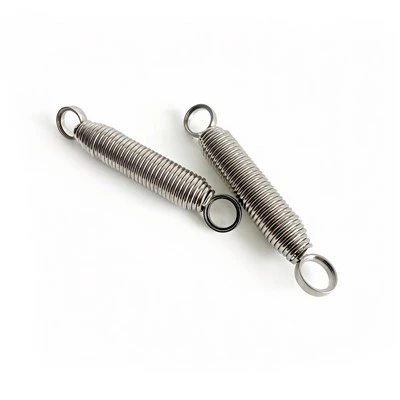
Before we discuss its impact, let’s clarify what pitch is. The pitch of a compression spring is the distance between corresponding points on adjacent coils, measured parallel to the spring’s axis. For example, if you measure the distance from the top of one coil to the top of the next, that’s the pitch. This seemingly simple measurement holds the key to many aspects of a spring’s behavior.
Effect on Spring Rate
One of the most direct ways pitch affects a compression spring is through its spring rate. The spring rate, also known as the stiffness of the spring, is defined as the force required to compress the spring by a unit distance. Mathematically, it can be expressed as (k=\frac{F}{\Delta x}), where (k) is the spring rate, (F) is the applied force, and (\Delta x) is the change in length.
When the pitch of a compression spring increases, the coils are more spaced out. This results in a lower spring rate because there is more room for the coils to move relative to each other when a force is applied. Conversely, a smaller pitch means the coils are closer together, making it more difficult for the spring to compress. As a result, the spring rate increases.
For instance, in a high – precision mechanical device where a very specific spring rate is required, adjusting the pitch can be a crucial step in the manufacturing process. Our team of engineers often fine – tunes the pitch to meet the exact spring rate specifications provided by our customers.
Impact on Solid Height
Another important consideration is the solid height of the compression spring. The solid height is the total length of the spring when all the coils are compressed together so that they are in contact with each other. A larger pitch will result in a greater solid height because the coils are initially more spread out.
This is particularly important in applications where space is limited. If a spring with a large pitch is used in a confined space, it may not compress fully without hitting adjacent components. On the other hand, a spring with a smaller pitch will have a lower solid height, which can be advantageous in applications where compactness is key.
Influence on Buckling
Buckling is a critical issue in compression spring design. It occurs when a spring bends or deflects laterally under a compressive load instead of compressing axially. The pitch of a spring plays a significant role in its buckling behavior.
A spring with a large pitch is more prone to buckling because the coils are more flexible and have a greater tendency to move out of alignment when a load is applied. In contrast, a spring with a smaller pitch is generally more stable and less likely to buckle because the coils support each other more effectively.
To prevent buckling, our design team carefully considers the pitch in relation to the spring’s diameter, length, and the applied load. We may recommend a spring with a smaller pitch for applications where the load is high or the spring is relatively long.
Fatigue Life
The pitch can also impact the fatigue life of a compression spring. Fatigue failure occurs when a spring fails after repeated loading and unloading cycles. When the pitch is too large, the coils may experience greater stress concentrations during each cycle. This is because the larger gaps between the coils allow for more movement and deformation, which can lead to cracks and eventually failure.
A smaller pitch, on the other hand, distributes the stress more evenly across the coils. This reduces the likelihood of stress concentrations and increases the fatigue life of the spring. In applications where the spring is subjected to millions of cycles, such as in automotive engines or industrial machinery, choosing the right pitch is essential to ensure long – term reliability.
Force Distribution
The pitch affects how the force is distributed along the length of the compression spring. In a spring with a uniform pitch, the force is evenly distributed among the coils. However, in some cases, a variable pitch spring may be used to achieve a non – uniform force distribution.
For example, a spring with a decreasing pitch from one end to the other can be used to provide a progressive spring rate. This means that the spring becomes stiffer as it is compressed further. Variable pitch springs are commonly used in applications such as shock absorbers and suspension systems, where a non – linear response is required.
Design Considerations for Different Applications
When designing compression springs, the pitch must be carefully selected based on the specific application requirements. In the automotive industry, for example, compression springs are used in engine valves, suspension systems, and brakes. The pitch is chosen to ensure the right balance of spring rate, solid height, and fatigue life.
In the electronics industry, where space is often at a premium, springs with smaller pitches are preferred to achieve a compact design. These springs also need to have a high level of precision to ensure reliable operation.
In medical devices, such as surgical instruments or implantable devices, the pitch is selected to meet strict performance and safety standards. The spring must be able to provide the required force while maintaining a long fatigue life and being resistant to corrosion.
Working with a Compression Spring Supplier
As a compression spring supplier, we understand the complexities of pitch and its impact on spring performance. Our team of experienced engineers is equipped with the knowledge and tools to design and manufacture compression springs with the optimal pitch for your specific application.
We start by working closely with our customers to understand their requirements. Whether it’s a high – precision aerospace application or a simple consumer product, we take into account factors such as load, deflection, space constraints, and environmental conditions.
Using advanced manufacturing techniques, we can produce compression springs with a wide range of pitches, from very small to large. We also offer custom – designing services to create springs with variable pitches or other unique features.
Conclusion

The pitch of a compression spring is a critical factor that affects its spring rate, solid height, buckling behavior, fatigue life, force distribution, and overall performance. By carefully selecting the pitch, we can create compression springs that meet the exact requirements of various applications.
Extension Springs If you’re in need of high – quality compression springs, we’d love to work with you. Our team is ready to provide expert advice and support throughout the design and manufacturing process. Contact us to discuss your compression spring needs and let us help you find the perfect solution for your project.
References
- Shigley, J. E., & Mischke, C. R. (2001). Mechanical Engineering Design. McGraw – Hill.
- Budynas, R. G., & Nisbett, J. K. (2011). Shigley’s Mechanical Engineering Design. McGraw – Hill.
- Avallone, E. A., Baumeister III, T., & Sadegh, A. (2010). Marks’ Standard Handbook for Mechanical Engineers. McGraw – Hill.
Wenzhou Huajie Precision Spring Co., Ltd.
As one of the most professional compression springs manufacturers and suppliers in China, our products have good reputation in the market. Please rest assured to wholesale bulk compression springs in stock here and get pricelist from our factory. We also accept customized orders.
Address: No.6 Chuangsan Road, Lingang Industrial Zone, Yueqing, Wenzhou City, Zhejiang Province, China.
E-mail: ZGhuajieTH@163.com
WebSite: https://www.huajiespring.com/
